Healthcare IT Outsourcing Explained: Benefits and Implementation Guide
Do you know that healthcare organizations are increasingly turning to external IT partners to align in the digital landscape? Managing EHRs and telehealth platforms is costly within the context of running a healthcare system. Hence, organizations are looking for options that offer specialized skills and scalable infrastructure along with consistent compliance support. This way, clinical teams only have to focus on patient care.
Since the global healthcare IT outsourcing market was valued at USD 54.3 billion in 2024, it is now projected to nearly double, reaching USD 103.3 billion by 2033. The growth rate is at a CAGR of 7.34% between 2025 and 2033.
In this guide, you will get to know what healthcare IT outsourcing covers and why organizations choose it. Additionally, you will understand how to implement it successfully by managing the risk involved and measuring ROI with a strategic approach to using outsourcing for innovation, not just cost savings.
What is Healthcare IT Outsourcing?
Healthcare IT outsourcing refers to the practice of delegating technology-related tasks and services to external vendors. Following this practice eliminates the need to manage them within your organization. This includes electronic health record management and medical billing outsourcing, as well as telemedicine platform development, along with healthcare application maintenance and even cybersecurity services.
Partnering with healthcare IT service providers gives organizations access to specialized skills and advanced infrastructure. They also get compliance-ready solutions without the cost of building them in-house. Outsourcing saves money. It also helps hospitals and clinics keep up with new healthcare technologies while keeping data secure and meeting HIPAA rules.
Key Benefits of Healthcare IT Outsourcing
Healthcare IT outsourcing delivers operational and technological as well as compliance advantages that directly impact patient care quality and organizational growth. Therefore, it offers more than mere cost saving, which includes:-
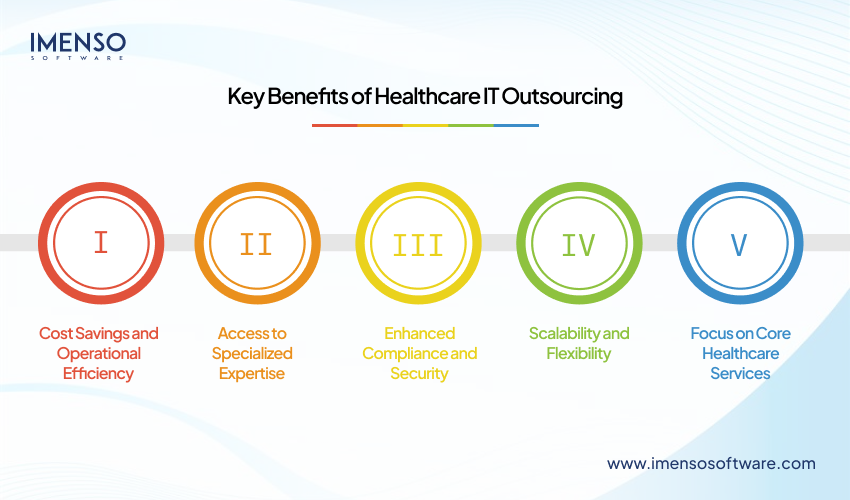
- Cost Savings and Operational Efficiency
Outsourcing eliminates the need for heavy investments in hardware and software licenses as well as in full-time IT staff. Hospitals can convert fixed costs into variable costs by partnering with a healthcare IT outsourcing company and paying only for the services they use. This frees up your budget for patient care and innovation.
- Access to Specialized Expertise
Vendors bring deep expertise in EHR implementation and healthcare app development. They also integrate skilled approaches to medical billing outsourcing along with other specialized areas. This ensures faster project execution with improved accuracy with the latest technology.
- Enhanced Compliance and Security
You can address the increasing threat of cyberattacks by associating with a suitable vendor that offers related services. This is an important step that will also enable you to ensure HIPAA compliance in order to reduce legal and reputational risks.Want to know how much a HIPAA-compliant healthcare app can cost you? Read our HIPAA-compliant healthcare app development cost to find out.
- Scalability and Flexibility
Vendors managing healthcare software services offer solutions that will allow you to address dynamic demands during off-season or during other times. As a result, you can easily scale IT operations up or down depending on demand, so you can run your operations seamlessly, whether it’s during a seasonal patient surge or while expanding telemedicine services. - Focus on Core Healthcare Services
As a healthcare organization, the primary objective is to deliver quality patient care. Therefore, by outsourcing its functions, you can focus more on it instead of managing complex tech infrastructure.
Potential Risks With Healthcare IT Outsourcing Services and How to Mitigate Them
Organizations must be aware of potential challenges that could affect operations and patient trust. Also, keep in check the other significant benefits that healthcare IT outsourcing services offer.
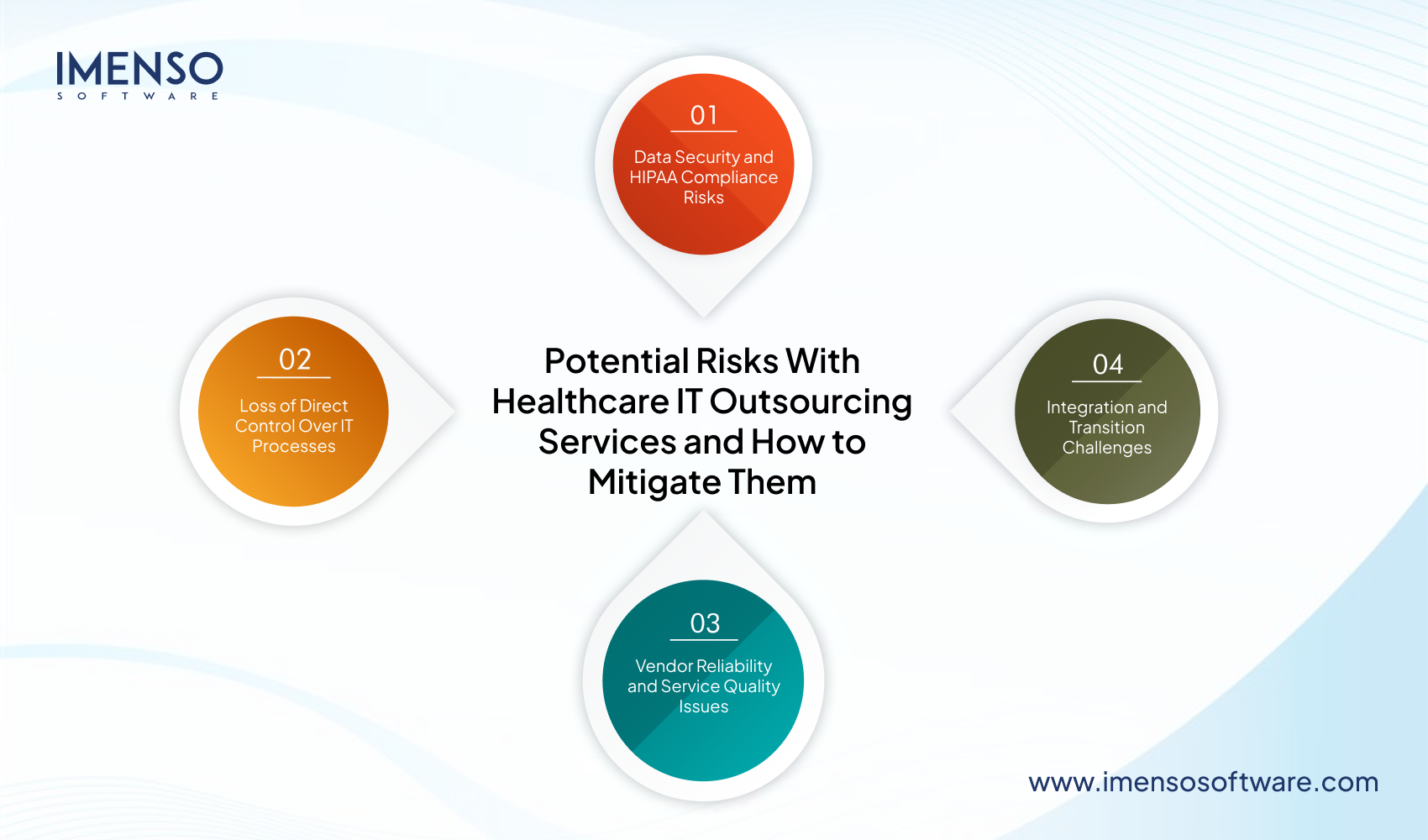
- Data Security and HIPAA Compliance Risks
Your outsourcing operations involve sharing sensitive patient data with third parties, and data breaches can lead to fines as well as reputational damage.
How to Mitigate: Partner with vendors who adhere to HIPAA compliance and offer ISO certifications, as well as regularly audit their security measures to make sure that encrypted data transfers are included. Additionally, include strict compliance clauses in service-level agreements.
- Loss of Direct Control Over IT Processes
When IT management is in external hands, that might lead to delays in decision-making, and oversight can also be reduced. This is another important concern that you need to tackle.
How to Mitigate: You can consider working with multiple outsourcing providers so you do not rely on just one, which might offer you limited benefits. This approach allows you to change or add vendors as needed, along with access to the project dashboards, where you track outsourced work for better control.
- Vendor Reliability and Service Quality Issues
A poorly performing vendor can lead to delays, downtime, or substandard service delivery.
How to Mitigate: Start with conducting a thorough vendor evaluation after checking available client references and case studies. You can also evaluate authentic healthcare IT project portfolios for the performance metrics, escalation protocols, and penalty clauses in SLAs.
- Integration and Transition Challenges
Migrating to an outsourced IT model may cause temporary disruptions in workflows. This may also cause compatibility issues with existing systems that can’t be ignored.How to Mitigate: Plan phased transitions with clear onboarding steps. Also, ensure an approach for staff training and a backup continuity plan.
Step-by-Step Guide to Implementing Healthcare IT Outsourcing
Are you thinking of integrating healthcare IT outsourcing services into your organization? You will have to develop a strategy to work with them. This is because a well-structured approach ensures smooth execution and achieves measurable results.
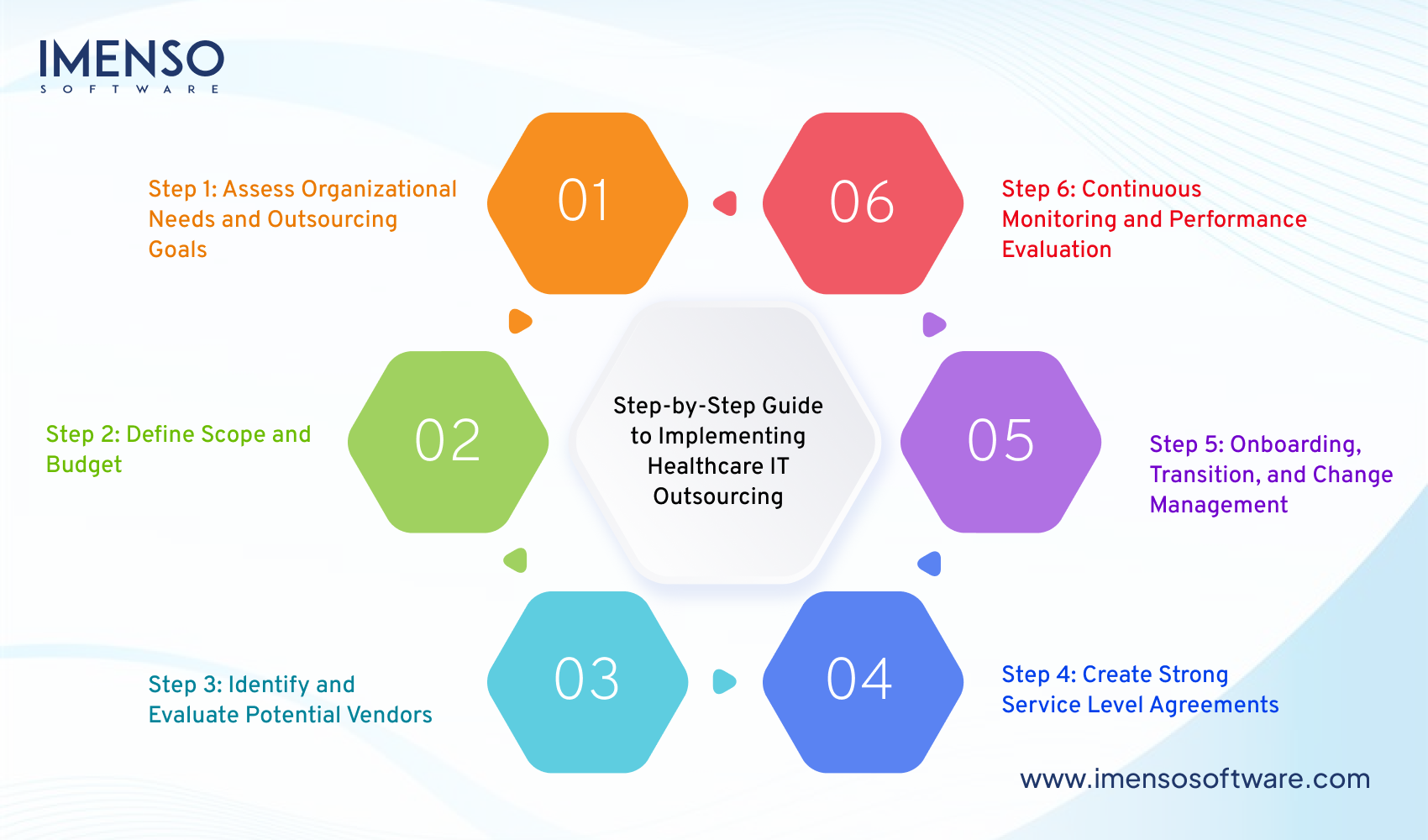
Step 1: Assess Organizational Needs and Outsourcing Goals
Start by listing the IT functions you want in your organization. These might include EHR management, cloud hosting, and telehealth platforms. Set clear goals such as lowering costs or improving scalability in order to implement them without any hassles.
Step 2: Define Scope and Budget
Define a clear deadline, budget, and plan for current costs and future benefits to get the best value from healthcare IT outsourcing. You need to decide what your outsourcing project should deliver.
Step 3: Identify and Evaluate Potential Vendors
Research vendors with proven experience in healthcare IT consulting services. Don’t forget to check compliance certifications such as HIPAA, HITRUST, client case studies, and their track record on similar projects.
Step 4: Create Strong Service Level Agreements
SLAs should have detailed performance metrics and data protection measures. They should also possess suitable escalation processes along with penalties for non-compliance, which are necessary to ensure accountability and service consistency.
Step 5: Onboarding, Transition, and Change Management
You should plan a smooth transition with minimal disruption to ongoing operations. Train your staff for easier adoption with the new workflows and maintain constant communication with the vendor during the onboarding phase.
Step 6: Continuous Monitoring and Performance Evaluation
You can use analytics dashboards and hold regular review meetings to track vendor performance. Also, do periodic audits to check compliance and find areas for improvement in healthcare IT outsourcing.
Choosing to implement a methodical approach that minimizes risks and ensures seamless integration. This adds a benefit to position your healthcare organization better for long-term digital growth.
Measuring the ROI of Healthcare IT Outsourcing
A successful healthcare IT outsourcing strategy focuses on delivering clear and measurable value. Organizations should monitor both financial and operational metrics to assess ROI effectively.
Key ROI Metrics to Monitor
- Cost Savings – Compare IT operational expenses before and after outsourcing.
- Productivity Gains – Measure improvements in service delivery speed and uptime.
- Compliance Efficiency – Assess reductions in HIPAA violations or audit issues.
- Patient Satisfaction – Monitor feedback scores related to technology-enabled services like telehealth.
Choosing the Right Healthcare IT Outsourcing Partner
Outsourcing can improve healthcare operations when you collaborate with a suitable partner. A poor choice can cause compliance issues, delays, or rising costs. It works like part of your team and helps improve efficiency and patient care while eliminating delays or any compliance issues. You can use the checklist below to choose with confidence.
Must-Have Criteria
| S. No. | Criteria | Description |
| 1. | Proven healthcare expertise | Ask for case studies in EHR, telehealth, or revenue cycle management. |
| 2. | Certifications & compliance | Look for HIPAA, HITRUST, ISO 27001, and SOC 2 credentials. |
| 3. | Robust security | End-to-end encryption, MFA, and documented incident response procedures. |
| 4. | Integration skills | Strong FHIR and API knowledge, plus hands-on experience with major EHRs. |
| 5. | References & results | Speak with current clients to validate delivery quality and ROI. |
Operational Fit
| S.No. | Operational Fit | Description |
| 1. | Flexible engagement models | Fixed price, time-and-materials, or dedicated teams to match your project risk profile. |
| 2. | Governance & transparency | Weekly status updates, clear SLAs, and shared dashboards. |
| 3. | Scalability | Ability to ramp resources quickly to meet new demands |
| 4. | Financial stability | A track record of business continuity and long-term viability. |
Cultural -Practical Fit and Contract Essentials
| S.No. | Element | Description |
| 1. | Communication style | Dedicated project managers and quick escalation paths. |
| 2. | Time-zone alignment | Overlap for real-time collaboration. |
| 3. | Innovation mindset | Evidence of R&D in AI, IoMT, or cloud optimization. |
| 4. | Detailed SLAs | Uptime, response times, and security KPIs. |
| 5. | Data & IP rights | Clear clauses on code ownership and patient data control. |
| 6. | Exit strategy | Knowledge transfer plans to ensure a smooth transition if needed.
|
| 7. | Transparent pricing | No vague “out-of-scope” cost traps. |
Quick Vendor Scorecard
Rate each vendor on a 0–5 scale for:
- Domain expertise
- Compliance & security
- Integration capability
- Communication & governance
- Scalability & cost model
| Tip Shortlist vendors scoring 4 or higher before deep negotiations. |
How AI is Reshaping Healthcare IT Outsourcing?
Artificial Intelligence is becoming a key driver for innovation in IT outsourcing. It can help in predictive maintenance and anomaly detection. This keeps systems running smoothly and securely while allowing IT teams to focus on bigger technology projects.
Outsourcing companies are increasingly offering AI-driven solutions such as:
- Predictive analytics for patient risk assessment
- Chatbots for round-the-clock patient support
- AI-based medical imaging analysis for faster diagnosis
- Natural language processing to handle clinical documentation
AI adoption is likely to be a major growth factor in this rise. Providers who partner with outsourcing firms that leverage AI will be better positioned to meet future healthcare demands.
Why Outsource Healthcare App Development Services to Imenso Software?
The outsourcing healthcare app development services decision is more about partnering with a team that understands compliance and patient-centric innovation. Imenso Software brings together healthcare domain expertise with cutting-edge tech skills and a proven outsourcing model to deliver secure and high-performing solutions.
- Deep Healthcare Domain Knowledge
- End-to-End Development Capabilities
- Compliance & Security-First Approach
- Flexible Outsourcing Models
- Proven Track Record
- Transparent Communication
Outsourcing healthcare app development with Imenso Software means getting a partner who blends technical expertise, healthcare compliance, and business understanding, so you can focus on improving patient care while we handle the tech.
FAQs
- What is the average cost of healthcare IT outsourcing?
The cost can range from $25 to $150 per hour for outsourced IT services which also depends on the provider’s location and expertise as well as the complexity of tasks. - How can hospitals ensure HIPAA compliance when outsourcing IT services?
Hospitals should partner only with vendors who have proven HIPAA compliance certifications and sign a Business Associate Agreement. They should also follow strict data encryption and audit protocols. - Which healthcare IT functions are most commonly outsourced?
The most common functions include electronic health record management and IT helpdesk support. The cloud hosting and cybersecurity services, as well as telehealth platforms, are also in demand. - How long does it take to see ROI from outsourcing?
ROI timelines are variable in most cases. But many healthcare providers report noticeable cost savings and efficiency improvements within 6–18 months after implementation.
Want more information about our services?
Similar Posts
Information Technology Software Solutions for Healthcare Industry
While healthcare is at times misunderstood to be a direct link between illnesses and their standalone treatments, that’s not the case. Ideally, any system of medicine should be constructed as an unbiased, comprehensive unit responsible for curing diseases or improving the quality of a patient’s remaining life, alleviating pain, making care accessible, reducing wastage of […]...
Top Use Cases of Data Visualization Dashboards in Healthcare
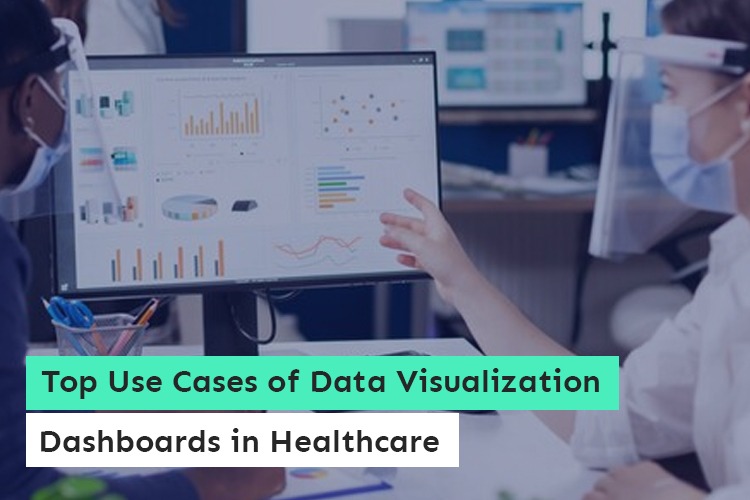
The human eye is naturally drawn to pictures more than text lists. Therefore, it is not an exaggeration to claim that data science visualizations in healthcare are essential for saving lives. The healthcare sector is being shaken up by big data. Simply put, data visualization is the practice of displaying data graphically, such as through […]...
How Much Does It Cost to Build a HIPAA-Compliant Healthcare App
In February 2025, Community Health Center, a nonprofit in Middletown, Connecticut, had a major data breach. It affected 1,060,936 people. Sensitive data such as names, Social Security numbers, and medical information was exposed. Today, the nonprofit continues to face litigation. But the gravest fallout is the loss of customer trust. In February 2024, Change Healthcare […]...