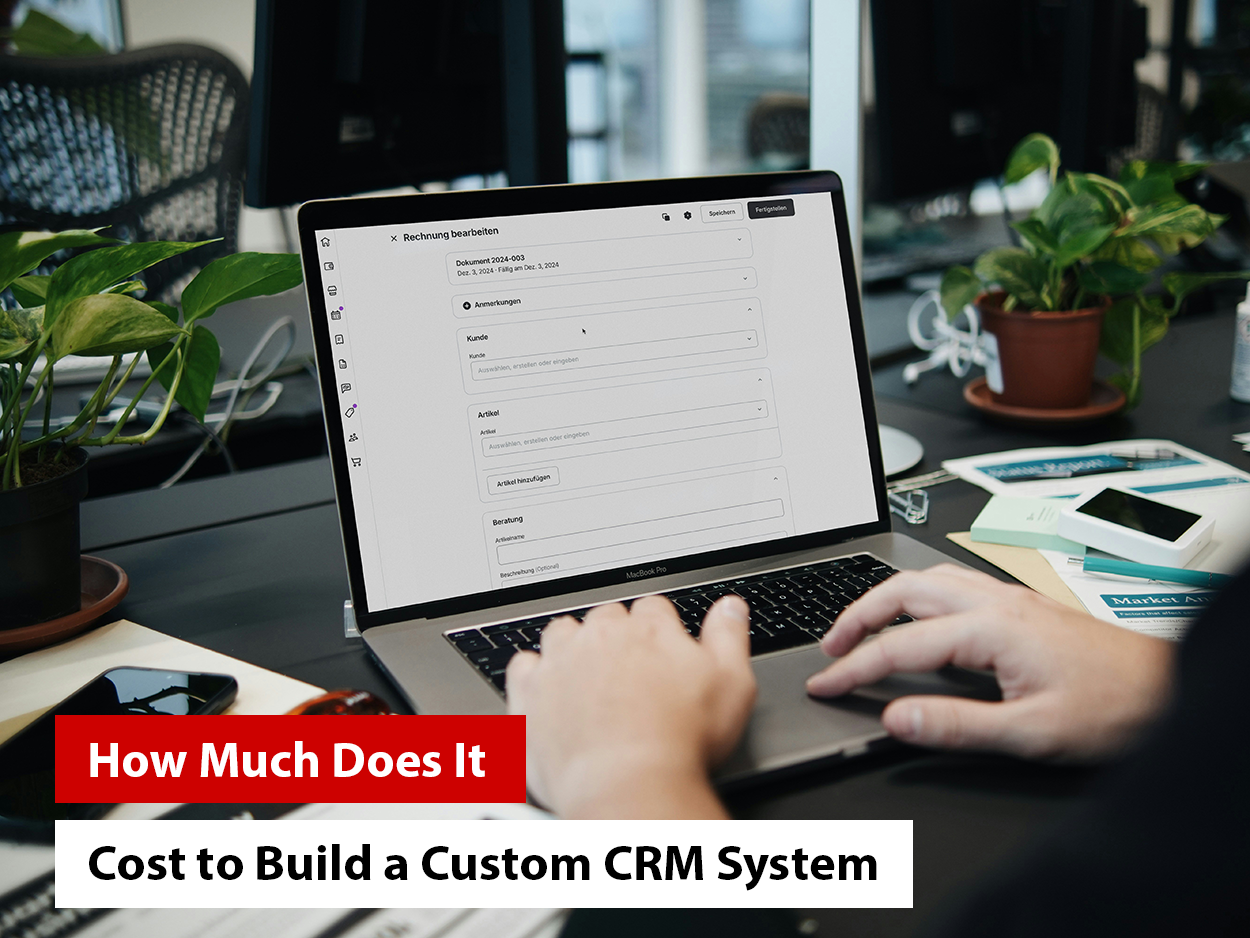
How Much Does It Cost to Build a Custom CRM System
Every dollar spent on CRM software gives an average return on investment of $8.71.
–Nucleus Research
Customer Relationship Management (CRM) platforms have served as a pillar of businesses across industries. At the very basic level, it works as a record system. A CRM tracks interactions and stores client profiles. On this basis, it creates reports.
Today, though, this is just scratching the surface of what a CRM can do. The digital revolution hasn’t left it untouched. Modern, custom CRMs serve as systems of engagement. They offer a unified view of customer engagement and provide usable insights to reshape client interactions.
Clearly, investing in this tool is critical to enhance customer experiences. But investing in one requires careful consideration. Keep reading to find out the factors that affect the cost. By the end of the post, you’ll have a good idea of how much budget you must allocate for it.
Cost of a CRM System: A Quick Overview
CRM costs vary greatly. Your unique business needs are the key influencing factor. The CRM provider also impacts the cost.
Below is a general cost breakdown of various types of CRMs.
- A minimum viable product with basic features: $20,000 to $55,000
- A CRM with a few features: $60,000 to $160,000
- A CRM with advanced capabilities: $160,000 to $450,000
- A system with many features and additional modules: $500,000 to $750,000
Factors Affecting the Cost of Custom CRM Development
6 key factors drive the cost of CRM.
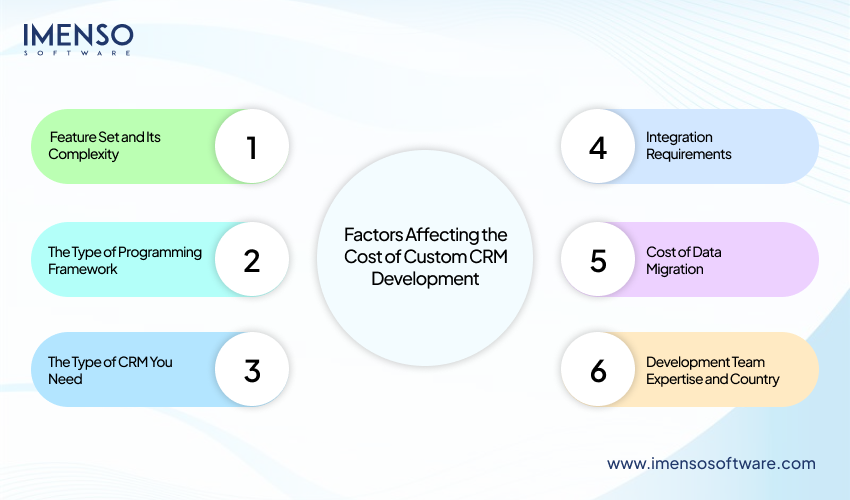
#1 Feature Set and Its Complexity
A CRM with basic features costs less. With the addition of more functions, the price increases. The table below explains how feature complexity adds to the cost.
| Feature | Complexity | Approximate Cost |
| Contact Management | Low | $3,000 – $6,000 |
| Revenue Pipeline | Medium | $6,000 – $12,000 |
| Process Automation | High | $15,000 – $20,000 |
| Integration with Messaging Channels | Medium | $6,000 – $12,000 |
| Custom Reports & Dashboards | High | $12,000 – $16,000 |
| Granular Access Control | Medium | $4,000 – $9,000 |
| Third-Party Service Integration | Medium/High | $6,000 – $16,000 |
| Mobile App Support | High | $18,000 – $35,000 |
| AI/ML Features | Very High | $30,000 – $60,000+ |
#2 The Type of Programming Framework
The development framework you choose affects the time it takes to build a custom CRM. It also impacts its scalability. The table below makes this clearer.
| Stack | Scalability | Efficiency | Ideal For |
| MERN (Mongo, Express, React, Node.js) | High | High | Startups and small businesses |
| Python + Django + PostgreSQL | High | Medium-High | Data-intensive software |
| .NET + MS SQL Server | Enterprise-grade | Medium | Large-scale businesses |
| LAMP Stack | Moderate | Affordable | Small internal business apps |
| Laravel + Vue.js | High | High | Mid-sized custom software |
| Pro Tip Save on custom CRM system development costs with an open-source tech stack. It eliminates the licensing fee. To scale affordably, use cloud-native tools like AWS Lambda. |
#3 The Type of CRM You Need
CRM’s cost also depends on the type of CRM you need. There are three main types of CRM. Each has its own features. All of them demand different levels of technical expertise.
a. Operational CRM System
An operation CRM automates sales and customer service processes. It has features like contact tracking and task planning. They are best for businesses wanting to enhance their customer experiences. It also promotes better internal efficiency.
Custom CRM cost for this type of software begins from $30,000. It can go up to $100,000.
b. Analytical CRM System
These CRMs track customer behavior. They also monitor buying trends. Such a CRM requires complex data processing. It also needs integration with data sources.
Analytical CRMs usually cost $40,000 or above. The price can be as high as $150,000. It depends on the amount of data and reporting tools it has.
c: Collaborative CRM System
Collaborative CRMs consist of shared databases and past customer interactions. They also have multi-communication tools. Their main role is to enhance communication across teams.
The cost ranges between $30,000 – $130,000. This price relies on how deeply integrated the features are.
#4 Integration Requirements
The cost of CRM development increases if you integrate it with your current systems. The price is higher if there are more integrations. Integrations’ complexity also impacts the overall cost. However, they also enhance the CRM’s value. The table below explains how integrations affect the price.
| Complexity of Integration | Approximate Cost | Development Time | Examples |
| Simple | $2,00–$3,000 | 1–2 weeks | email marketing integration, calendar synchronization, and social media integration. |
| Moderate | $5,000–$7,000 | 2–4 weeks | E-commerce platforms, accounting programs |
| Complex | $8,000–$12,000+ | 4–6 weeks | ERP systems, marketing automation platform |
| Custom API Development | $20,000–$60,000+ | Relies on your needs | Custom-built systems, complex data transformations |
#5 Cost of Data Migration
There are four types of data migration.
Storage Migration
Data moves from one physical storage place to another. An example is hardcopy to digital storage.
Database Migration
This is data migration from one database to another. Businesses do this due to a system upgrade or change in their tech stack.
Application Migration
An application and its data move from one environment to another. For example, like another OS.
Cloud Migration
Data, apps, etc., can be migrated to a public, private, or hybrid cloud system.
CRM data migration can be free. Contrarily, it can cost up to a few thousand dollars. CRM development companies charge based on your current CRM. The cost also depends on the amount of data you want to migrate.
#6 Development Team Expertise and Country
The kind of CRM provider you choose immensely affects the cost. It’s ideal to offshore to custom CRM development to reduce the expense. Below are the common locations where companies offshore their CRM software. All of them have varying price points.
United States
Custom CRM development cost is the highest in the US. Prices are the highest in San Francisco and New York. The average price begins from $19,000. It can go up to $83,000 and beyond.
Latin-America
Latin American regions have risen in importance over the past few years. Places like Brazil, Mexico, and Colombia charge an hourly rate of $40 to $90. For an advanced CRM, their cost can go up to $40,000.
Europe
Western European nations charge higher. Countries like Germany, the UK, and France charge around $35,000 and above. A CRM with sophisticated features will cost not least $150,000.
Asia
Asian nations like India and the Philippines are the most cost-effective. Indian cities like Surat and Kochi have an abundance of highly skilled developers. Since the cost of living is low in these places, offshoring to them offers a great return in terms of cost. Similarly, cities in the Philippines like Manila and Cebu charge way lower than those in the US.
Why Choose a Custom CRM for Your Business
A CRM platform has the potential to boost revenue by as much as 245%
–LLCBuddy
Custom CRM development offers various benefits to businesses. While you invest more initially, the long-term returns outweigh the cost. Below are all the ways it benefits you.
User-Friendly for Employees
Custom CRM meets your specific needs. You can tailor the features to your business. Thus, it becomes more accessible to team members. This, in turn, encourages more people to adopt it.
Evolves With Your Business Needs
The cost of a custom CRM includes features for scalability. The software can easily handle the growing business needs. When your workflows expand, the CRM can be updated to meet the new changes. This future-proofs your CRM investment. It ensures that the software remains productive for your business over time.
Helps Manage Various Business Processes
CRM tailored for your business helps manage processes across departments. Below are the various workflows that it helps you manage.
a. Resources and Assets
Custom CRM software helps track inventory and supplies. It allows businesses to plan repairs and maintenance. Companies can better manage their asset usage and depreciation.
b. Staffing
A tailored CRM solution enables firms to manage staffing. They can track staff performance and attendance. It also helps with shift planning and tracking staff training.
c. Customer-Related Data
A custom software manages all data related to clients. These consist of their preferences and behaviors. It also helps with targeting and tracking client feedback.
d. Accessibility to Business Data
Custom solution offers a unified data storage and sharing system. This includes data related to business contacts. It also helps with access control and security. So, companies can manage access to business data easily. This leads to better process efficiency.
e. Sales and Marketing Automation
A custom CRM cost includes its design for sales and marketing support. It offers tools for scoring and lead generation for sales teams. For the marketing team, it has functions for lead generation and nurturing. It also offers support for marketing automation and customer engagement.
f. Partner or Vendor Relationships and Support
A tailored CRM solution helps businesses manage partner or vendor relationships. It does so with a central system to manage partner and vendor data. This helps firms track their performance with them. It also has various relationship-building tools.
Seamless Implementation
Implementing a new CRM takes much time. The process is also complex. A custom CRM simplifies this task. Since it’s tailored to your business, the implementation is smoother. It, in turn, cuts the risk of errors. It also ensures that you can start using the new software without business disruption.
How to Reduce Custom CRM Development Cost?
You can cut the costs of custom CRM with a thoughtful approach. Smart planning and implementation are key to lowering costs. Here are some of the best ways to reduce development expenses.
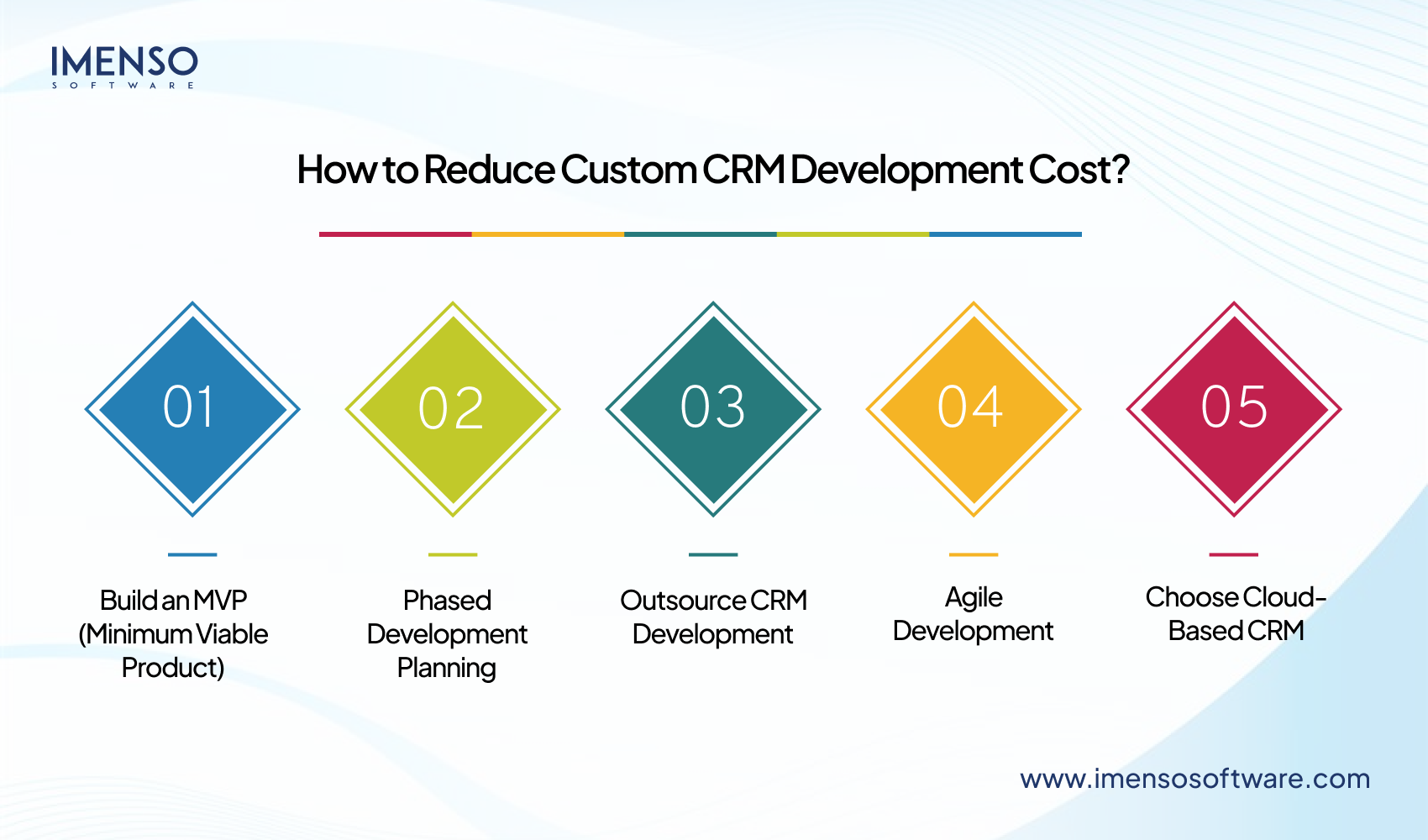
#1 Build an MVP (Minimum Viable Product)
An MVP lets you quickly bring expenses under control. Here, you create a simpler version of the CRM with key functions. This lets you save money on the initial stage. At the same time, there’s minimal disruption to your workflows.
An MVP approach also leads to better user adoption rates. This is due to stepwise releases. Moreover, you can improve the CRM based on user feedback. This ensures that it closely aligns with your business needs.
#2 Phased Development Planning
This involves breaking complex projects into smaller chunks. It helps manage much of the custom CRM costs. This approach lets you identify and fix issues. So, it saves time and development assets.
Firms that use this strategy complete their first phase within a quarter. They wrap up the entire rollout in less than a year. The approach is suited for projects with many stakeholders. This strategy also leads to greater user productivity. This is because the team members learn new CRM functions gradually. It also helps with retiring legacy systems without process disruption.
To properly use this approach, every phase should have its own tight schedule. It should meet the overall rollout timeline. This enables firms to learn from early phases. They can use user feedback to enhance the design. It also lets them avoid making the same mistakes again.
#3 Outsource CRM Development
Outsourcing CRM offers massive cost savings. Outsourcing to countries like Asian countries like India helps you avoid the high expenses linked to in-house development. These are the costs related to hiring and training in-house teams. You also do not need to buy hardware and software. The cost of infrastructure maintenance is further eliminated.
Meanwhile, you can leverage the expertise of a global pool of developers. They can deliver your CRM at half the cost of local developers.
#4 Agile Development
An agile approach helps cut CRM costs dramatically. This is because the process involves constant feedback collection. You develop CRM in smaller sprints. So, it helps you identify issues that would prove expensive in the future.
The best strategy is to hire a CRM developer who offers agile CRM development. This helps you avoid the extra expenses of redesigning and getting a tailored product.
#5 Choose Cloud-Based CRM
Cloud-based CRM is cheaper than an on-premise one. This is because the provider handles backups and maintenance. You don’t need to spend on costly equipment. Another benefit is that you can change your payment and subscription plans when your operations expand.
A great advantage of cloud-based CRM is that the provider offers integration functions. So, you can use the software with existing tools.
Custom CRM: A Smart, Cost-Saving Investment
Custom CRM offers immense value to businesses of all sizes. It has been shown that companies can save as much as 60% on costs with a custom solution. At the same time, it gives them full control over their customer relationship processes.
Custom CRM development doesn’t need to be an expensive affair. By looking at your needs and focusing on key features you can get a cost-effective yet tailored solution. Custom development is thus a strategic investment for businesses. Partnering with a trusted developer helps boost the value of your CRM investment.
Frequently Asked Questions
- How to find out the exact cost of a custom CRM?
To get the precise cost, specify your needs. These include features and integrations. You must also be clear about your scalability requirements. Communicate these things to a reliable software development company. You must also consider the expenses involved in testing and deployment.
- Why choose a custom CRM over ready-made software?
Custom CRMs offer the exact features related to your business. They give you full ownership. You can also integrate the CRM smoothly with your current apps. They are more flexible for future scaling as well.
- How much time does it take to develop a custom CRM?
It can take anywhere between a few weeks to more than a year. The time depends on the complexity of your CRM. Simple to moderate custom CRMs can be built within a few months. An enterprise-grade custom CRM usually takes a year.
- How much does it cost to implement a CRM system?
Implementation involves cost in a few key areas. These are consulting fees and data migration. User training and project management are two other areas where you need to spend. For small businesses, the cost can be between $1,000 – $15,000. For big firms, it’s anywhere from $100,000 to $250,000.
Want more information about our services?
Similar Posts
A Step-by-Step Guide to Developing a Minimum Viable Product (MVP) in 2025
Two roommates Brian Chesky and Joe Gebbia on a breezy day in October 2007 planned to rent out their apartment’s air mattresses to the attendees of a local conference. They called it “AirBed & Breakfast” and later shortened it to a fancier, “Airbnb.” At this time, they had a simple Minimum Viable Product (MVP). It […]...
From Data Breaches to Ransomware: Cybersecurity in the Age of Software Development
In today’s digital age, software development is more integral to our lives than ever before. From mobile apps to web platforms and even the Internet of Things (IoT), software powers the world around us. However, as offshore software development continues to evolve, so do the threats it faces. Cybersecurity is of paramount importance in this […]...

Cracking the Code: How to Pick the Right CMS for Your Website
As mobile apps continue to reshape our digital landscape, understanding the financial intricacies behind their creation is paramount. This blog delves into the cost factors that define mobile app development, shedding light on the various components that contribute to the final price tag. From the intricacies of app complexity and platform considerations to the impact […]...