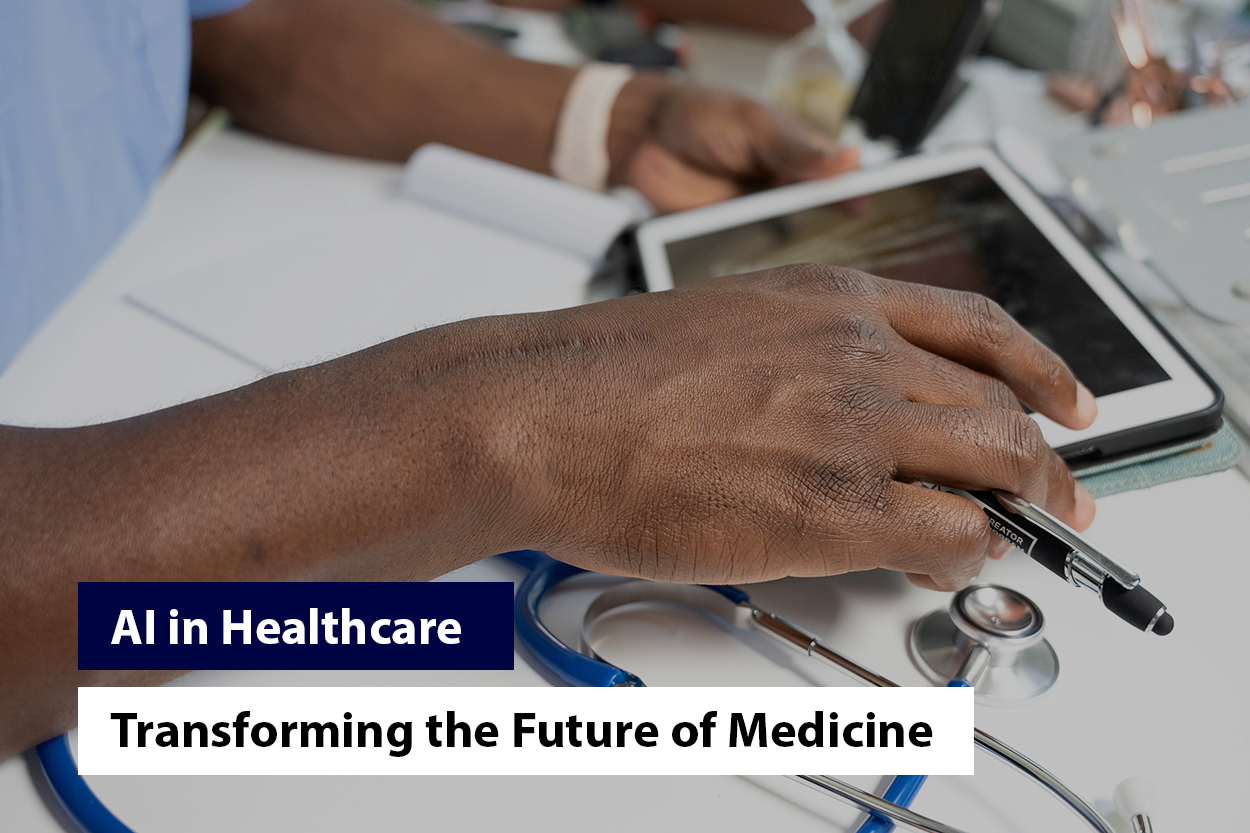
AI in Healthcare – Transforming the Future of Medicine
| Quick Summary The AI in healthcare industry is unlocking possibilities we couldn’t have imagined a decade ago. It analyzes scans in seconds, predicts patient risks before symptoms appear, and helps design life-saving drugs with generative AI in healthcare. This amplifies their skills to enable more accurate, affordable, and personalized care. |
Artificial Intelligence is quietly revolutionizing with smart and impactful AI tools. As a result, it enhances diagnostics and offers optimum personalized patient care. Not only this, but it also alleviates operational burdens in hospitals worldwide.
The AI in healthcare industry is booming, from hospitals using AI for triage and initial scans to clinicians receiving note summaries via automated scribes. However, experts emphasize the importance of responsible implementation by citing safety and data quality as key concerns.
In this blog, we’ll explore real-world AI in healthcare scenarios, uncover its benefits, and much more.
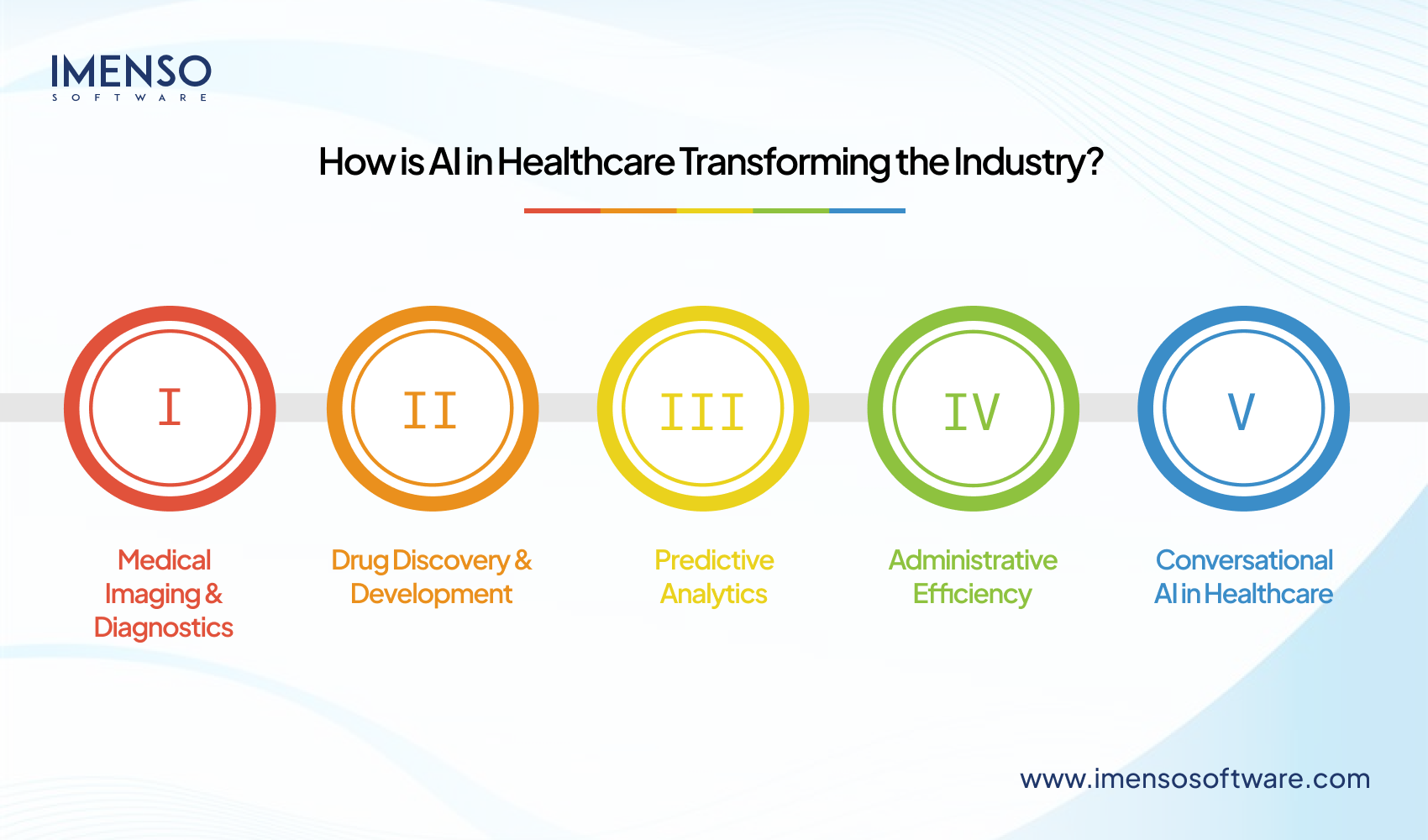
How is AI in Healthcare Transforming the Industry?
AI is transforming healthcare by bringing technological intelligence to every stage of the patient journey. The global AI in healthcare market is valued at US$14.92 billion in 2024 and projected to advance at a resilient CAGR of 38.6% from 2025 to 2030. Furthermore, it is a powerful assistant that accelerates medical decision-making processes more accurately.
Here are some of the most impactful AI applications in healthcare today:
-
Medical Imaging & Diagnostics
AI is changing the way doctors diagnose illnesses by seeing details that often slip past the human eye. With the ability to scan X-rays and CT images in just seconds, it can catch early signs of cancer or neurological problems with impressive accuracy. One breakthrough from Google’s DeepMind can even identify more than 50 eye conditions at the level of the best eye specialists in the world.
-
Drug Discovery & Development
Generative AI is changing how new medicines are discovered. It has eased the entire process of studying huge sets of molecular data and pointed to compounds that look most promising in only a few months. This cuts research costs and also brings life-saving treatments to patients much faster. This highlights how AI is reshaping medicine and giving real hope for quicker cures.
-
Predictive Analytics
AI-powered predictive analytics give healthcare the ability to act before problems get worse. It allows care institutions to forecast disease outbreaks and predict patient readmissions. This also helps spot individual health risks early with the help of machine learning. This allows doctors to step in sooner and improve outcomes that ultimately save more lives.
-
Administrative Efficiency
AI is quietly easing paperwork, which is one of healthcare’s heaviest burdens. Today, smart systems handle billing and scheduling with speed and accuracy behind the scenes. This lightens the load on hospitals and cuts down errors to ensure patients get the best possible care.
-
Conversational AI in Healthcare
Today, you can’t imagine modern healthcare without chatbots and virtual assistants. These are designed to cater to everyday health questions and assist in booking quickly to get immediate attention. They can even walk with them through recovery steps after treatment.
AI is now part of the heartbeat of healthcare, and it is reshaping how medicine works. What once felt like science fiction is now daily care. The real promise of AI is a future where medicine is faster and smarter, and also adapts to every patient with precision and compassion.
AI Applications in Healthcare: Real-World Examples
AI in healthcare isn’t science fiction anymore. In fact, it is already reshaping patient care and hospital workflow before our eyes.
Let’s explore some standout examples that illustrate how this transformation is unfolding.
-
Smarter Diagnoses
Radiologists now have powerful allies in AI, where they can scan millions of imaging files, X-rays, MRIs, and CT scans in the blink of an eye. This smooths the process of highlighting subtle abnormalities like early-stage tumors that might go unseen. For instance, Google’s DeepMind-developed tools are detecting over 50 different eye diseases with accuracy that rivals top ophthalmologists and help patients get the right treatment faster.
-
Personalized Treatment
Tempus AI combines genetic data and patient histories to offer tailored treatment options. A recent joint venture in Japan with SoftBank is bringing these smart insights directly to physicians which significantly expands access to personalized cancer care.
-
Faster Drug Discovery with Generative AI
Remember, discovering a drug used to take nearly a decade and cost millions. Insilico Medicine flipped that script using generative AI. Their Pharma.AI platform went from target discovery to a Phase II trial candidate (INS018_055) in under 30 months at a fraction of the traditional cost. That kind of leap could reshape how we treat complex diseases.
-
Expanding Precision Through Partnerships
I somorphic Labs, a DeepMind spin-off under Alphabet, combines AI with protein structure modeling (AlphaFold 3) to accelerate drug design and target discovery. These partnerships are bringing research labs and AI together to redefine what’s possible in pharmaceutical science.
-
Conversational AI Supporting Patients
AI isn’t confined to labs, but is helping everyday patients. Apps like Olivia from Tempus act as personal health concierges that pull your health records, explaining trends, and answering health questions anytime. It’s like having a trusted health companion in your pocket.
AI applications are breakthroughs bringing earlier detection and smarter treatments with faster drug development. It strengthens the bridge between technology and better human outcomes every day.
Future Trends of AI in Healthcare You Need to Know
Thinking about how AI in healthcare is going to transform the way medicine works? Well, the assumptions are very positive, as the innovations are making care more accurate and accessible, making diagnostics faster and personalized. Although many of these possibilities felt out of reach just a decade ago, today they are becoming a real part of modern healthcare.
Here are some of the most promising trends shaping the next decade you should know:
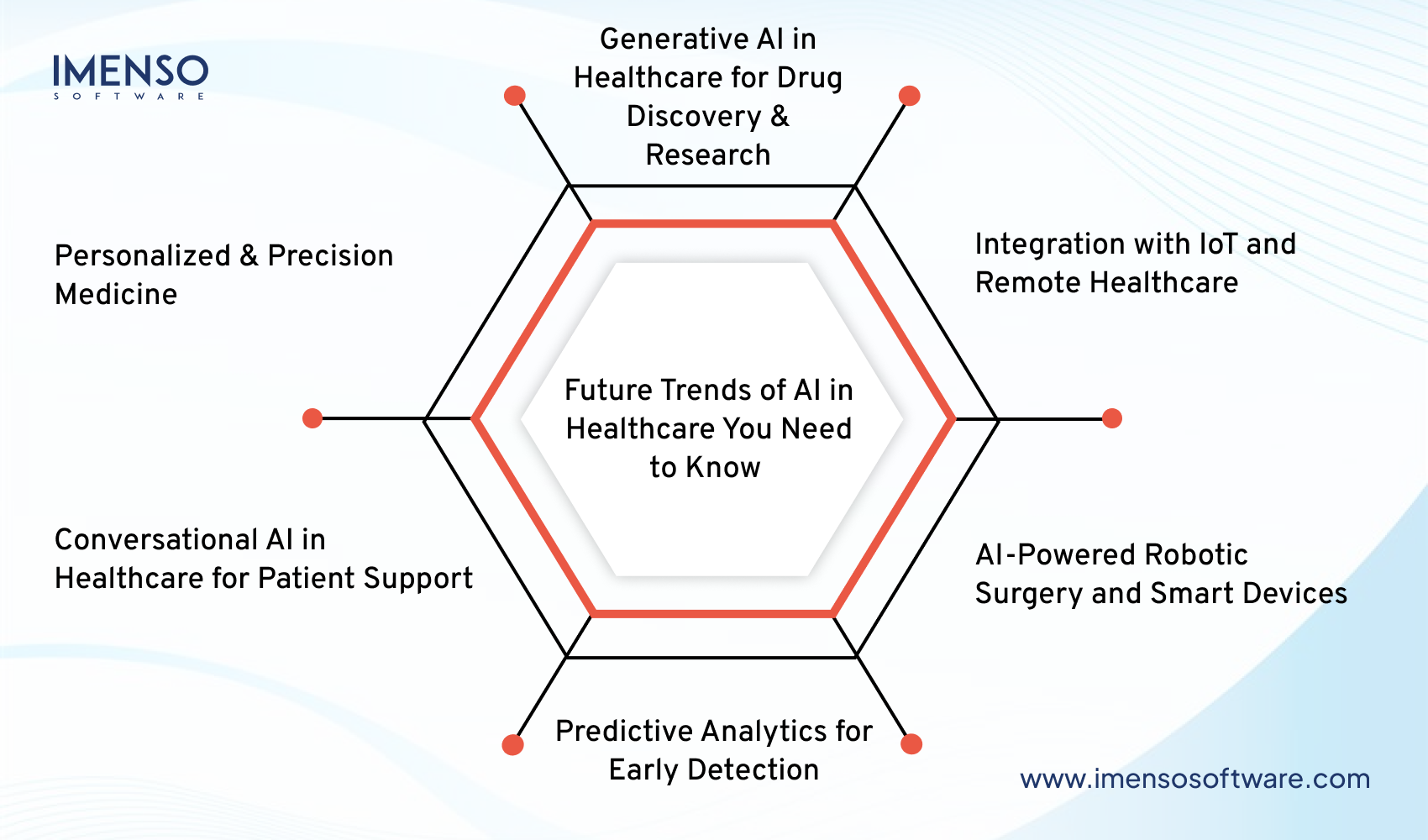
1. Generative AI in Healthcare for Drug Discovery & Research
Generative AI is speeding up the way new medicines are developed. AI can study massive datasets and quickly point to the most promising drug candidates, instead of spending years testing thousands of possibilities. It marks a big step toward a future where cures are discovered faster and more efficiently.
2. Personalized & Precision Medicine
AI is changing how medicine works by looking closely at a patient’s genetics and medical history to create treatments that fit them perfectly. This means care works better and side effects are minimized. Innovations like this are making healthcare more personal and focused on the needs of each patient.
3. Conversational AI in Healthcare for Patient Support
The conversational AI in healthcare will play a major role in improving patient engagement as virtual assistants and chatbots have become more advanced. This includes everything from answering medical queries to scheduling follow-ups and ensuring 24/7 support, and much more. In fact, this will be proven very helpful to the patients residing in remote or underserved regions.
4. Predictive Analytics for Early Detection
AI applications in healthcare are moving toward predicting diseases before they develop. For this, predictive AI analyzes health records and wearable device data to identify early warning signs of conditions. It might be for heart disease, diabetes, and cancer, therefore, enabling preventive care to be possible and accessible.
5. AI-Powered Robotic Surgery and Smart Devices
Do you know with the incorporation of smart AI tools it is easier to perform robotic surgeries that’s too safely and less invasive? Thanks to the smart medical devices that has evolved to provide real-time health updates and insights to doctors to treat patients more effectively while keeping patients informed about their own care.
6. Integration with IoT and Remote Healthcare
The smartly designed AI tools will work closely with IoT devices that are meant to continuously collect health data like heart rate or blood sugar levels. Due to the integration of AI softwares into these devices makes it quick to alert doctors and patients about the potential health issues before they become serious by analyzing this data in real time.
Lastly, the future of AI in healthcare is not only about automation. It is about better surgeries, connected devices, and fair systems that cut costs, improve outcomes, and give people more control over their health.
Challenges and Ethical Considerations in AI in Healthcare
Technology has evolved a lot and has transformed various sectors of the market. Similarly, AI in healthcare has also brought so many advantages to the industry. But, despite of the huge potential to improve the caregiving, there are a few challenges that can’t be ignored You need to address these to ensure that AI is used fairly and safely.
Data Privacy and Security
The healthcare data is very sensitive and can’t be taken for granted. However, on the other hand, AI need access to the data to work effectively. But, to ensure the safety and security of the data along with allowing the AI to fairly use it, hospitals need to abide themselves with strict rules like HIPAA and GDPR to tackle this challenge.
Bias in AI Algorithms
Do you know how AI systems are trained? They learn from data and now think what would happen if they are trained on sets of data that lacks diversity. AI can give biased results which can later result in misdiagnosis or improper treatments to the patients.
The Black Box Problem
There are so many AI models that are designed and trained well but sometimes lacks the ability to demonstrate their journey to a particular decision. This lack of transparency eventually causes troubles for doctors along with the patients to put their faith into the AI. It is actually a major concern especially when it comes to critical situations.
Integration with Existing Systems
The AI has become very advanced but still it has limited capabilites. You might notice that even the smartest AI tools cannot work smoothly with a hospital software and electronic health records. Therefore, a smooth integration is necessary for AI to be truly effective in the healthcare industry.
Maintaining Human Connection
No matter how advanced these AI tools would be, but the patients still value empathy and human interaction that can’t be fully replicated. The overreliance on AI could make healthcare feel impersonal as it is designed to support the care providers and not with the intention to replace them.
In short, AI in healthcare offers cuntless benefits from early detection to treatments. But its success depends on responsible use that should be fair and transparent as well as designed to support doctors while maintaining trust and safety for patients.
AI and the Next Chapter of Healthcare
The AI in healthcare has become the reality from once being a vision for the future. In fact, it is not becoming the part of everyday life of the patient’s care that are wisely talore to each one’s need.
Not only this, it is now speeding up the process of the discovery of new medicines that earlier takes a few years. Hospitals are also using AI to reduce paperwork and focus on what truly matters: patient care.
However, there are a few challenges regarding trust and fairness along with data privacy, but the pace of progress gives a relief that these will be addressed going forward.
At Imenso Software, we develop custom healthcare solutions that turn this vision into reality. Our expertise helps us use technology to improve care and reduce costs, from smart diagnostics to smart patient engagement tools. Furthermore, smart technology like AI is transforming healthcare and redefining how we live healthier, longer, and better lives, with the right innovations.
FAQs
1. What do you mean by AI in healthcare?
AI in healthcare refers to the implementation of advanced technology to help medical professionals diagnose and monitor patients effectively. This allows care institutions to offer better care with the integration of technology.
2. How is AI used in healthcare institutions?
There are so many ways AI is integrated into the healthcare systems, which include analyzing images or predicting health risks. These tools are also used to manage hospital workflows and assist in drug discovery to make new solutions available.
3. What are the advantages of AI in healthcare?
There are numerous benefits to this, which range from faster & accurate diagnostics to personalized treatment plans. Not only this, but it also reduces overall hospital costs by improving its efficiency and offers consistent support to the patients, making the best healthcare available.
4. What does generative AI in healthcare mean, and how is it helpful?
This refers to AI systems that design new drugs and predict molecular structures to encourage clinical trials. Also, it speed up the research process while reducing the drug development cost and ensures that life-saving treatments reach the patients faster.
5. Which companies are leading in AI healthcare?
Some of the big names are IBM Watson Health, Siemens Healthineers, and Philips. Startups like Tempus and Insilico Medicine are also making breakthroughs in diagnostics, treatment, and drug discovery with AI.
Want more information about our services?


Similar Posts

How to Secure Telehealth: Avoid Security and Privacy Risks
The global telehealth market is projected to surpass $240 billion by 2026 which is fueled by patient demand for convenience and provider interest in remote care solutions. But this rapid growth brings more risk than innovation. Telehealth platforms handle vast amounts of personal health data so these systems become prime targets for cyberattacks in the […]...
Top Use Cases of Data Visualization Dashboards in Healthcare
The human eye is naturally drawn to pictures more than text lists. Therefore, it is not an exaggeration to claim that data science visualizations in healthcare are essential for saving lives. The healthcare sector is being shaken up by big data. Simply put, data visualization is the practice of displaying data graphically, such as through […]...
Information Technology Software Solutions for Healthcare Industry
While healthcare is at times misunderstood to be a direct link between illnesses and their standalone treatments, that’s not the case. Ideally, any system of medicine should be constructed as an unbiased, comprehensive unit responsible for curing diseases or improving the quality of a patient’s remaining life, alleviating pain, making care accessible, reducing wastage of […]...