How to Secure Telehealth: Avoid Security and Privacy Risks
The global telehealth market is projected to surpass $240 billion by 2026 which is fueled by patient demand for convenience and provider interest in remote care solutions. But this rapid growth brings more risk than innovation.
Telehealth platforms handle vast amounts of personal health data so these systems become prime targets for cyberattacks in the absence of proper security controls. Healthcare data breaches exposed over 133 million records in 2023 alone.
In this blog, we’ll break down:
- Why are telehealth platforms vulnerable?
- The most common security and privacy risks
- Proven strategies to keep your systems compliant and secure
This guide will help you take proactive steps to safeguard your telehealth ecosystem effectively.
The Biggest Security & Privacy Risks in Telehealth
Telehealth brings care to your fingertips, but it also presents cybercriminals with a larger attack surface than ever before. Here are the top threats you can’t afford to ignore:
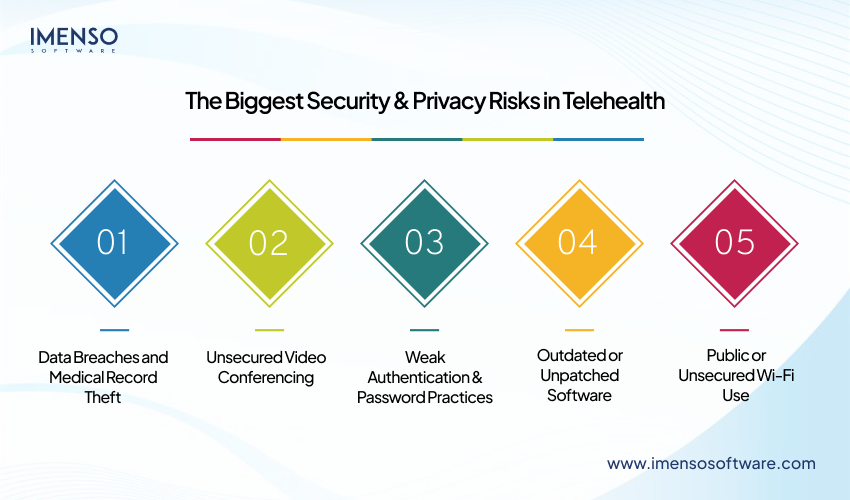
1. Data Breaches and Medical Record Theft
Healthcare data is a goldmine, worth 10–20 times more than credit card details on the market. Hence, breaches can expose sensitive details resulting in identity theft and insurance fraud.
Example: A U.S. Telehealth in 2024 suffered a breach that exposed over 3 million patient records leaving millions in lawsuits and lost business.
2. Unsecured Video Conferencing
Not all video tools are built for healthcare. Using general platforms without end-to-end encryption risks unauthorized interception of live consultations.
Example: A New York clinic faced a HIPAA fine after patient consultations were streamed via an unsecured platform that hackers accessed.
3. Weak Authentication & Password Practices
Does your telehealth portal rely on simple logins and have no multi-factor authentication integration? If yes, that’s like locking the clinic door but leaving the window wide open.
4. Outdated or Unpatched Software
Cybercriminals often target old telehealth apps and medical device software as they have known vulnerabilities. That’s why skipping updates is like handing them a blueprint.
5. Public or Unsecured Wi-Fi Use
Patients and providers sometimes join consultations from coffee shops or airports. Without VPN protection, this is an open invitation for “man-in-the-middle” attacks.
Best Practices to Secure Telehealth Platforms
It’s about building habits and systems that protect patient trust, so keeping telehealth safe isn’t just about buying the right software. Here’s how to make sure your virtual care stays secure without turning every appointment into a tech headache.
- Stick to HIPAA-Compliant Tools
A regular video chat app might be fine for catching up with friends, but it’s not built for handling medical information. Go for platforms that are HIPAA-compliant and offer end-to-end encryption also keep an audit trail. It’s the easiest way to make sure private health conversations stay private. - Make Multi-Factor Authentication a Must
Only using passwords to lock your systems is a weak option in the present day. That’s why, if you add an MFA works as a second lock. It’s like a one-time code or fingerprint scan that prevents your system from unauthorized logins, even if someone guesses a password. - Encrypt Everything
You can think of encryption as turning sensitive information into a secret code. This ensures that your data remains encrypted from a live video call to stored medical files. It safeguards your data even when it’s traveling and while it’s sitting in your system. - Keep Everything Updated
Having outdated software is like leaving your clinic door unlocked. Don’t forget to schedule automatic updates for your telehealth apps and devices also security systems so known vulnerabilities get patched before hackers find them. - Teach People How to Stay Safe
The best technology won’t help if people don’t know how to use it securely. Use tools and implement them to train your staff about the right practices.
Common Telehealth Security Mistakes to Avoid
It’s easy to overlook small gaps that open big doors for security threats, even with the best intentions. Here are the slip-ups that can put patient data and your reputation at risk.
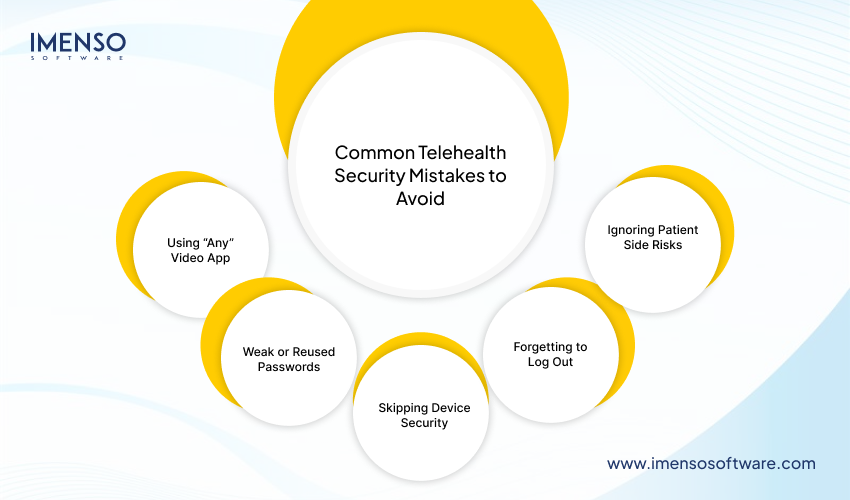
- Using “Any” Video App
Do you know that apps like Zoom, FaceTime, or WhatsApp are not built for full medical compliance? They might seem convenient, but can can lead to accidental privacy breaches. - Weak or Reused Passwords
If your clinic password is “Clinic123” or reused across accounts, you’re inviting trouble. Hackers love easy targets, and a weak password can undo thousands spent on security tools. - Skipping Device Security
It’s not just the software; you need to protect the devices too. Unlocked tablets, unencrypted laptops, or shared devices without proper logouts are a goldmine for cybercriminals. - Forgetting to Log Out
Sounds basic, but failing to log out of telehealth platforms or EHR systems, especially on shared computers can leave sensitive information exposed to the next person who uses it. - Ignoring Patient Side Risks
Even if your system is secure, patients might join calls from public Wi-Fi or store their records in unsafe ways. Not educating them about risks can still lead to a breach.
Case Study: The AMCA Breach — A Wake-up Call for Telehealth Security
The U.S. Healthcare sector was rocked by one of its most alarming data breaches in June 2019. The American Medical Collection Agency (AMCA), a third-party billing vendor for major diagnostic companies announced that hackers had infiltrated its payment system. The breach went undetected for eight months that exposing the personal and medical data of over 25 million patients.
The sensitivity of the stolen information is what made the situation devastating. Many elements got compromised, including names, addresses, dates of birth, social security numbers, insurance details, and in some cases, medical test results were compromised. Patients who had trusted their healthcare providers suddenly found their most private health details floating in dark web marketplaces.
The ripple effects were immediate and severe:
- Quest Diagnostics, one of AMCA’s clients, confirmed 11.9 million patient records were affected.
- LabCorp reported 7.7 million impacted patients.
- Multiple lawsuits followed, and AMCA filed for bankruptcy due to the financial and reputational fallout within months.
The Takeaway for Telehealth Providers:
If a third-party vendor’s system is breached, it’s your reputation on the line. Robust vendor vetting, continuous security audits, and encrypted data handling, even by partners — are non-negotiable. Telehealth platforms must treat vendor security as an extension of their own.
Case Study: The Babylon Health Glitch — When a Video Call Became Public
In June 2021, UK-based telehealth provider Babylon Health known for its AI-driven consultations and online GP services faced a privacy nightmare that played out in real time.
A user logged into the Babylon Health app for a routine appointment, only to find they could view video recordings of other patients’ consultations. Within minutes, social media lit up with patient concerns. The company admitted that a software bug had allowed some users to access consultation videos that were not intended for them.
While Babylon Health insisted that the issue affected “a small number of patients” and was fixed within hours, the damage was already done. Patients had witnessed the fragility of their supposedly private healthcare conversations. The UK’s Information Commissioner’s Office (ICO) launched an investigation and Babylon’s reputation suffered a significant blow just as telehealth adoption was booming post-pandemic.
Why It Matters?
This wasn’t a hacker attack; it was a preventable software flaw. It’s a stark reminder that even small coding errors can cause massive trust erosion for telehealth providers. Rigorous testing, frequent penetration checks, and robust user access controls are as critical as encryption.
How to Secure Telehealth: Practical Strategies That Work
The truth is, telehealth security isn’t just about buying the right software. It’s about building a culture of privacy that starts from the first line of code and runs to the patient’s smartphone screen.
Here’s how successful telehealth providers are making that happen:
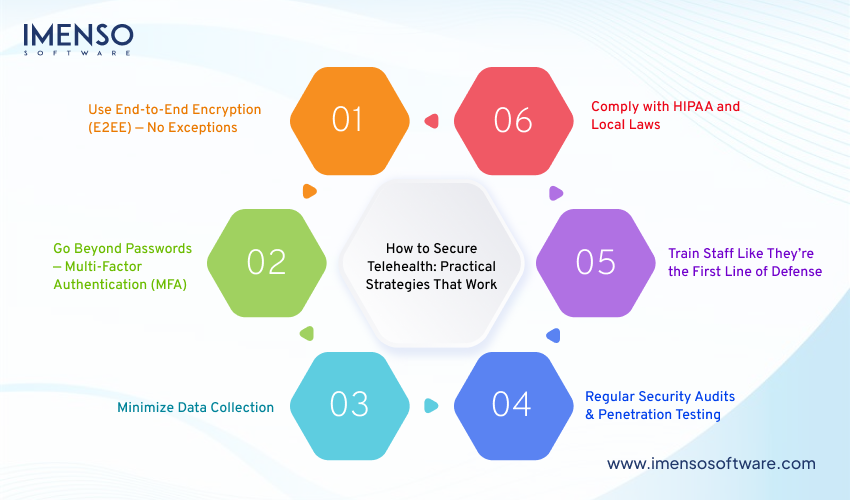
1. Use End-to-End Encryption (E2EE) — No Exceptions
Every call, message, and file shared between doctor and patient should be locked from the moment it’s sent to the moment it’s opened. Think of it as sealing your conversation in a vault that only two keys can open: yours and the patient’s.
2. Go Beyond Passwords — Multi-Factor Authentication (MFA)
A password alone is like locking your clinic with a glass door. Adding MFA — a one-time code, fingerprint scan, or face recognition — turns it into a reinforced steel gate.
3. Minimize Data Collection
If you don’t collect it, it can’t be stolen. Stick to only what’s necessary for treatment and compliance. Unnecessary personal details are just extra bait for hackers.
4. Regular Security Audits & Penetration Testing
Your telehealth platform needs regular “health checks” from security experts to catch weaknesses before attackers do, just as your patients need to get annual health checks.
5. Train Staff Like They’re the First Line of Defense
Human error is still the biggest cause of breaches. Front desk assistants, nurses, also even doctors need regular training to spot phishing emails and handle sensitive files correctly also to use secure apps.
6. Comply with HIPAA and Local Laws
You need to stick to the compliance regulations to build patients’ trust like HIPAA in the US and GDPR in Europe as well as similar regulations worldwide.
Top Tools & Technologies for Securing Telehealth
Since technology is the heart of secure telehealth, which is why we need to choose the right tools to keep patients’ data safe. It also ensures compliance of the platform with laws like HIPAA.
Here are the must-have solutions every provider should consider:
1. HIPAA-Compliant Video Conferencing Platforms
Examples: Zoom for Healthcare, Doxy.me, VSee
These platforms use end-to-end encryption, secure data storage, and HIPAA-compliant protocols to ensure private consultations.
Real Use: Doxy.me was adopted by over 1 million providers during COVID-19 for its compliance and simplicity.
2. Secure Electronic Health Record (EHR) Systems
Examples: Epic, Cerner, athenahealth
These systems store patient data securely and control access permissions that they may have. They also integrate with telehealth platforms to prevent manual data transfers.
3. Multi-Factor Authentication (MFA) Solutions
Examples: Okta, Duo Security, Microsoft Authenticator
Choosing to add MFA helps prevent the most unauthorized logins from happening these days. They are proven to be very helpful, even if passwords are stolen.
4. Data Encryption Tools
Examples: Virtru, Symantec Encryption, BitLocker
These tools encrypt data both “in transit” and “at rest,” which ensures that it is not readable even if intercepted.
5. Intrusion Detection and Monitoring Systems
Examples: Splunk, CrowdStrike, SolarWinds Security Event Manager
These detect unusual access patterns and flag potential cyberattacks in real time.
6. Cloud Security Services
Examples: AWS HIPAA-eligible services, Microsoft Azure Healthcare, Google Cloud Healthcare API
These platforms offer built-in security compliance features, data encryption, and secure backups.
Common Mistakes to Avoid in Telehealth Security
This is true that even well-intentioned healthcare providers sometimes leave security doors wide open without realizing it.
Here are the biggest missteps you need to know and what they can cost you.
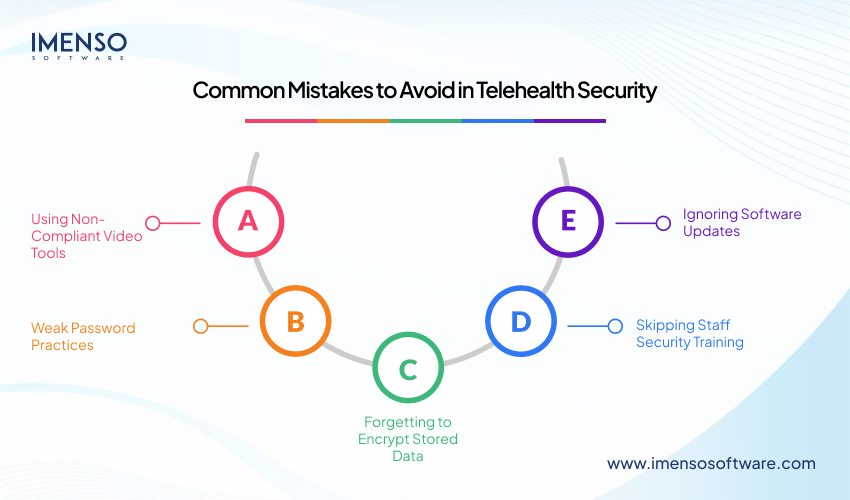
1. Using Non-Compliant Video Tools
A small clinic in Ohio thought regular Zoom was “good enough” for patient consultations. Unfortunately, this is not true in terms of securing the data. The private health details can be leaked when a call recording is stored in the wrong cloud folder. This happened to them, and they ultimately paid a $25,000 settlement.
Lesson: Always choose platforms built for healthcare and not generic video apps.
2. Weak Password Practices
One telehealth nurse reused the same password across her email, EHR login, and patient portal. Attackers waltzed into patients’ records undetected for weeks after hacking her email.
Lesson: Enforce unique and complex passwords with multi-factor authentication.
3. Forgetting to Encrypt Stored Data
A startup launched a promising mental health app but skipped encryption for stored chat messages to speed up development. A breach exposed 15,000 private conversations, destroying their reputation overnight.
Lesson: Encryption isn’t optional; it’s your safety net.
4. Skipping Staff Security Training
A large hospital’s telehealth program fell victim to a phishing attack when a receptionist clicked a fake link. One click gave hackers access to appointment schedules and billing records.
Lesson: Human error is the #1 cause of breaches, so train your team regularly.
5. Ignoring Software Updates
An outdated patient portal had a known security flaw that hackers exploited. The fix had been available for months, but nobody installed it.
Lesson: Schedule updates as part of your security routine, not “when you get time.”
Future Trends in Telehealth Security
Telehealth isn’t slowing down, and neither are cybercriminals. In the next few years, expect security to move beyond passwords and firewalls into smart and adaptive systems that think ahead.
- AI-Powered Threat Detection
You probably know that cyberattacks are getting more sophisticated these days. Phishing emails now look like real patient messages, and malware can hide in harmless-looking files. AI will soon act like a digital bodyguard to scan every login and messages or files in real time to spot suspicious behavior before it causes damage.
- Biometric Authentication
Forget typing passwords, the next wave of telehealth logins will recognize your face, voice, or even heartbeat. Biometric logins are nearly impossible to steal, and patients will love the “log in without typing” experience.
- Zero-Trust Architecture
The old security model assumed that once you were “inside” the network, you could be trusted. Not anymore. Zero-trust means no one gets blanket access; every request to see or move data must be verified, even from insiders.
- Blockchain for Medical Records
Blockchain can create an unchangeable, timestamped log of who accessed patient data and when. This means absolute transparency for audits and an extra layer of trust for patients.
- Post-Quantum Encryption
This may sound like science fiction to you for now, but it’s closer than you think. Quantum computers will be able to break today’s encryption in seconds which can prompt healthcare systems to upgrade to quantum-resistant encryption well before that day comes.
Concluding Words
Telehealth has brought the doctor’s office into our homes, but along with convenience comes a responsibility we can’t ignore. One security lapse could mean more than leaked data; it could mean broken trust, compromised care, and real harm to real people.
The future of telehealth will belong to the providers who treat cybersecurity like patient safety, proactive, constant, and non-negotiable. That means moving beyond bare-minimum compliance and embracing a culture where privacy is part of every click, call, and consultation.
Because at the heart of every encrypted file and secure login is not just “data” — it’s someone’s story, health, and peace of mind. And protecting that is the most important prescription we can write.
FAQs
- Why is telehealth security such a big deal?
Because your health data isn’t just numbers on a screen — it’s your identity, your medical history, and even details about your life that you wouldn’t want in the wrong hands. One breach can cause both financial loss and emotional harm. - What’s the biggest security risk in telehealth?
Weak access control tops the list. If accounts aren’t properly protected, hackers can bypass systems with stolen passwords or phishing tricks, and suddenly have access to confidential medical records. - How can patients protect themselves during telehealth visits?
Use trusted devices, keep your apps updated, enable two-factor authentication, and always make sure you’re on a secure Wi-Fi connection. Think of it like locking your front door before letting the doctor in. - Are video consultations safe?
They can be — but only if the platform uses end-to-end encryption and complies with healthcare regulations like HIPAA. If your provider can’t explain how your calls are secured, that’s a red flag. - What should healthcare providers do to prevent breaches?
Adopt a layered security approach: encryption, strict access controls, regular security audits, and ongoing staff training. Technology can do a lot, but human awareness closes the biggest gaps. - Can telehealth be more secure than in-person visits?
Surprisingly, yes, when systems are designed with strong security in mind, telehealth can protect patient data better than paper files or unsecured office networks. The key is constant vigilance.
Want more information about our services?


Similar Posts
Information Technology Software Solutions for Healthcare Industry
While healthcare is at times misunderstood to be a direct link between illnesses and their standalone treatments, that’s not the case. Ideally, any system of medicine should be constructed as an unbiased, comprehensive unit responsible for curing diseases or improving the quality of a patient’s remaining life, alleviating pain, making care accessible, reducing wastage of […]...
How Can Small Business Cope With The Long-Term Effects Of Covid-19?
The Covid-19 crisis has been disruptive for many businesses, but the SMBs have had the major burn of all. There has been some relief in 2021 as the vaccines are here, and the lockdown has been removed. But things are still far from ordinary. And according to experts, it can be until august 2021 to […]...

HIPAA Compliance for Software: A Practical Guide
Security breaches hit all types of businesses. The hardest hit of them all are the healthcare providers and their patients. In 2024, over 500 patient records were compromised. More than 20 healthcare providers had to pay hefty penalties for HIPAA violations. In light of this, the current situation seems shocking. HIPAA audits conducted for the […]...