Complete Product Experience (CPE): Key Components, Benefits & Strategy
What do you think, is delivering a great product enough in today’s hyper-competitive market? Or, do customers expect something more from the brands they trust? The reality is that the success of a product depends only on the Complete Product Experience (CPE) that companies provide to their customers. Every touchpoint shapes the perception of the customers and whether they will continue to engage with it in the future or not.
A well-designed CPE ensures not just satisfaction but also long-term loyalty and turns one-time buyers into repeat customers as well as brand advocates. This holistic journey that customers go through when interacting with a product matters a lot for a brand.
What makes this even more important today is the shifting consumer expectations. According to PwC’s Future of Customer Experience Survey, 73% of consumers say that customer experience is a critical factor in their purchasing decisions. This gap highlights why organizations need to adopt a comprehensive product experience strategy that goes beyond traditional product development.
In this blog, we will break down the CPE and explore how it can help brands create seamless and end-to-end experiences for their customers.
What is Complete Product Experience (CPE)?
When we talk about a complete product experience, it refers to the end-to-end journey that a customer goes through with a product that includes everything, such as;
- How they first discover the product to the onboarding process
- The way it solves their problems
- The ongoing support they receive
- How updates or new features are rolled out over time
Unlike a traditional approach that focuses only on product design or technical performance, CPE emphasizes the emotional and practical relationship customers build with a product. It connects the product’s significance and long-term value into one cohesive experience.
A strong product experience strategy makes every customer touchpoint feel consistent and personal. It helps businesses lower churn and build loyalty.
Apple’s software ecosystem is a good example to consider here, as it works smoothly with a simple design and easy syncing across devices. Customers also get quick support. This unified approach keeps people engaged and loyal. So, you can consider this a classic case of CPE done right.
Key Components of Complete Product Experience (CPE)
Delivering a CPE is like building a house, and here you can’t rely on just strong walls. You also need a solid foundation, along with thoughtful design and smooth finishing touches. Similarly, you need to incorporate essential components to build an efficient CPE.
Here are the core components you can’t miss:-
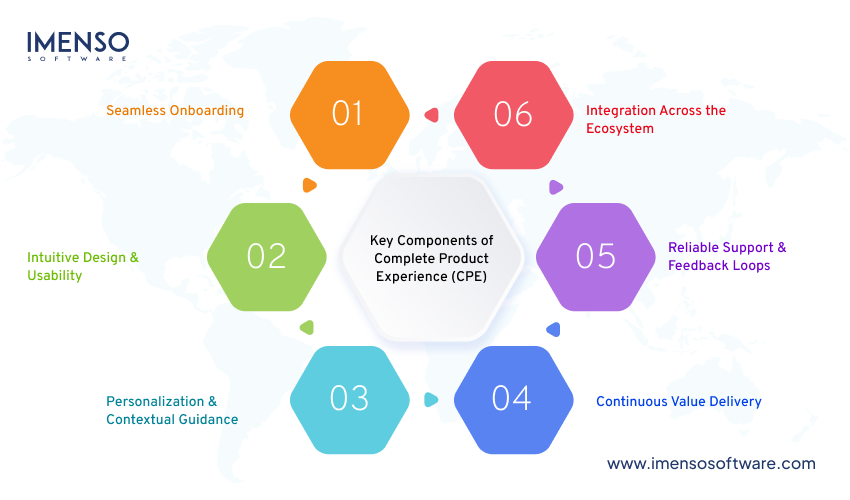
- Seamless Onboarding
First impressions matter a lot, as they may trigger returning, especially when they struggle to get started. You need to incorporate a guided walkthrough with interactive tutorials & tips to help users understand your offerings. - Intuitive Design & Usability
Products with clean layouts, simple navigation, and a responsive design to reduce frustration and increase adoption. For instance, you can consider products by Apple. Users tend to rarely use manuals as the designs themselves speak a lot. - Personalization & Contextual Guidance
Personalized dashboards, smart recommendations, and in-app guidance show users that the product adapts to their needs. This approach is necessary to meet the unique demands of each customer. - Continuous Value Delivery
Customers should see value throughout their journey. They consider the product to be evolving to serve better with regular updates, new features, and helpful content. - Reliable Support & Feedback Loops
Customers feel supported with easy-to-access help centers, chatbots, and quick responses. Plus, built-in feedback tools ensure their voices shape future improvements of the product. - Integration Across the Ecosystem
Today, no product exists in isolation. Whether it’s connecting with CRMs, payment gateways, or communication tools, smooth integrations create a complete and connected experience. You can consider a good example of digital products that are available in the market, such as Apple Pay, PayPal, etc.
Benefits of Complete Product Experience (CPE)
The payoff goes far beyond just satisfied users when companies focus on delivering a complete product experience, as it creates long-term value for both the customer and the business. Here’s how:-
- Higher User Retention
Customers are less likely to churn when they feel guided, supported, and valued. A strong CPE reduces risk as the customers stop doing business with a brand which is generally not addressed during the selling of a product. - Increased Customer Loyalty
A product should feel natural and not complicated, easy and enjoyable experiences turn users into brand advocates and brand loyalty. This is far more powerful than paid ads as it saves a lot of funds. - Faster Adoption of New Features
Users quickly embrace new features and updates when they have faith in the product. Hence, helping businesses innovate without worrying about resistance. - Boost in Revenue & Growth
A well-designed CPE creates upselling and cross-selling opportunities besides retaining customers. Research from Forrester shows that experience-driven businesses grow revenue 1.4x faster than their peers. - Competitive Advantage
Thoughtfully aligned experience can’t be copied in the crowded markets where features are often duplicated. This adds a competitive edge, and you become harder to replace.
So, CPE is about creating sustainable growth for your business and not just about making customers happy temporarily.
Case Study: How Slack Delivers a Complete Product Experience
The popular collaboration tool demonstrated how investing in product experience drives business success.
- Seamless onboarding helps new users quickly understand the product’s value through step-by-step tutorials.
- Personalization makes collaboration easier with custom channels and workflow automations.
- Ongoing engagement comes from regular updates, clear communication, and strong support.
- Community building encourages users to share tips and best practices which creates brand advocacy.
Result: Demandsage reported that teams using Slack are 47% more productive. This shows how a thoughtful CPE strategy not only improves customer satisfaction but also fuels adoption and long-term growth.
Strategy to Implement a Complete Product Experience
Building a Complete Product Experience isn’t about adding every feature possible. It’s about creating a connected and value-driven journey for your users.
Here’s a step-by-step approach for you to do this:-
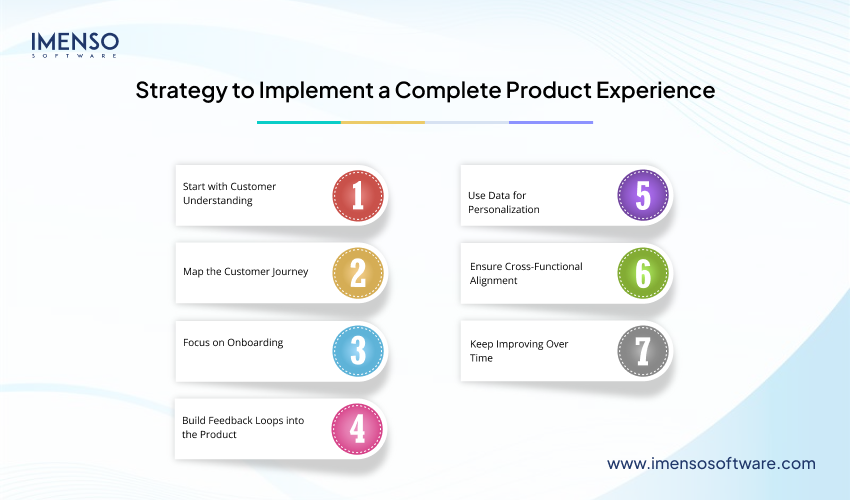
- Start with Customer Understanding
Talk to customers through surveys or interviews before you build new features. Focus on the problems they care about most and design experiences to solve them in your product. - Map the Customer Journey
Think about the entire journey, not just product use. Include steps like onboarding and renewals. Make sure every stage delivers value. - Focus on Onboarding
The first experience shapes long-term use. Keep onboarding simple with step-by-step guides or walkthroughs. AI assistants can also help new users get started faster. - Build Feedback Loops into the Product
Integrate feedback collection directly within the app. For instance, Slack prompts its users to share thoughts without friction to make it easy to act on suggested improvements. - Use Data for Personalization
Track how customers use your product and apply AI to suggest what matters most to them. People stick around when the experience feels made for them. - Ensure Cross-Functional Alignment
A CPE isn’t just the product team’s job to bring it to life. A consistent experience should be delivered by aligning all the significant teams around the same customer goals. - Keep Improving Over Time
A complete product experience is never finished. Release updates often, test what works, and grow the features that bring real value.
Challenges in Achieving a Complete Product Experience
Many brands consider that delivering a complete product experience may sound straightforward. However, businesses often hit real obstacles when trying to bring it to life. Some of the biggest challenges include:
- Siloed Teams and Poor Collaboration
When teams like product, marketing, and support do not work together, customers notice the gaps. The journey feels broken because every touchpoint looks and feels different. Without teamwork, it is very hard to create a smooth and connected experience. - Limited Customer Insights
Many businesses still depend on guesses instead of real data. This means they miss the right moment to connect with users that might slow their growth. It becomes difficult to understand customer needs or improve the product in ways that matter without accurate insights. - Overemphasis on Features Instead of Value
Sometimes brands believe that more features will make a product stronger. But too many features actually confuse customers and bring no value. People feel overwhelmed when usability & clarity are lost and the true value of the product is reduced. - Scaling Personalization
Personalizing for a few users is simple. Doing it for thousands or even millions is a challenge. It needs powerful systems, automation, and smart use of technology. Without these, businesses fail to make every customer feel understood. - Balancing Cost and Quality
Businesses also need to keep software development costs under control and provide quality products to their customers. So, it is important to find a balance that is one of the toughest challenges in creating a strong product experience.
Best Practices for Building a Sustainable CPE
Firstly, you need to know that creating a complete product experience is not a one-time project but an ongoing strategy. It requires consistency and adaptability along with innovation, while working with it.
Here are some best practices to guide the process:
- Start with Customer-Centric Design
Every CPE strategy should begin with the customer. Understand their needs, behaviors, and pain points to design products and experiences that truly solve problems. - Ensure Cross-Channel Consistency
Customers interact with brands across multiple touchpoints—website, mobile app, social media, in-store, and customer support. Aligning these channels ensures a seamless journey. - Leverage Data and Analytics
Use customer data to personalize interactions. McKinsey found that companies that excel at personalization generate 40% more revenue from those activities compared to average players. - Invest in Employee Training
Employees are often the face of the product experience. Training them to embody the brand values and understand customer needs ensures consistent delivery. - Integrate Feedback Loops
A strong CPE evolves with customer expectations. Encourage feedback through surveys, reviews, and direct interactions to make continuous improvements. - Balance Technology with Human Touch
Automation and AI improve the efficiency of the product. But human empathy remains an essential part of it. Customers value real connections and especially when solving complex issues. - Measure What Matters
Define KPIs like Net Promoter Score (NPS), customer retention rates, and churn reduction to track the success of your product. Consistently monitoring these metrics will help you refine your CPE strategy.
Example in Action:
Spotify leverages personalized recommendations, seamless cross-device experiences, and frequent updates based on user feedback. This combination not only improves customer satisfaction but also keeps users engaged for the long term.
How Imenso Helps You Create a Complete Product Experience
Designing a Complete Product Experience is not just about adding features. It’s about aligning technology, design, and customer needs into one smooth journey. This is where Imenso can make a real difference.
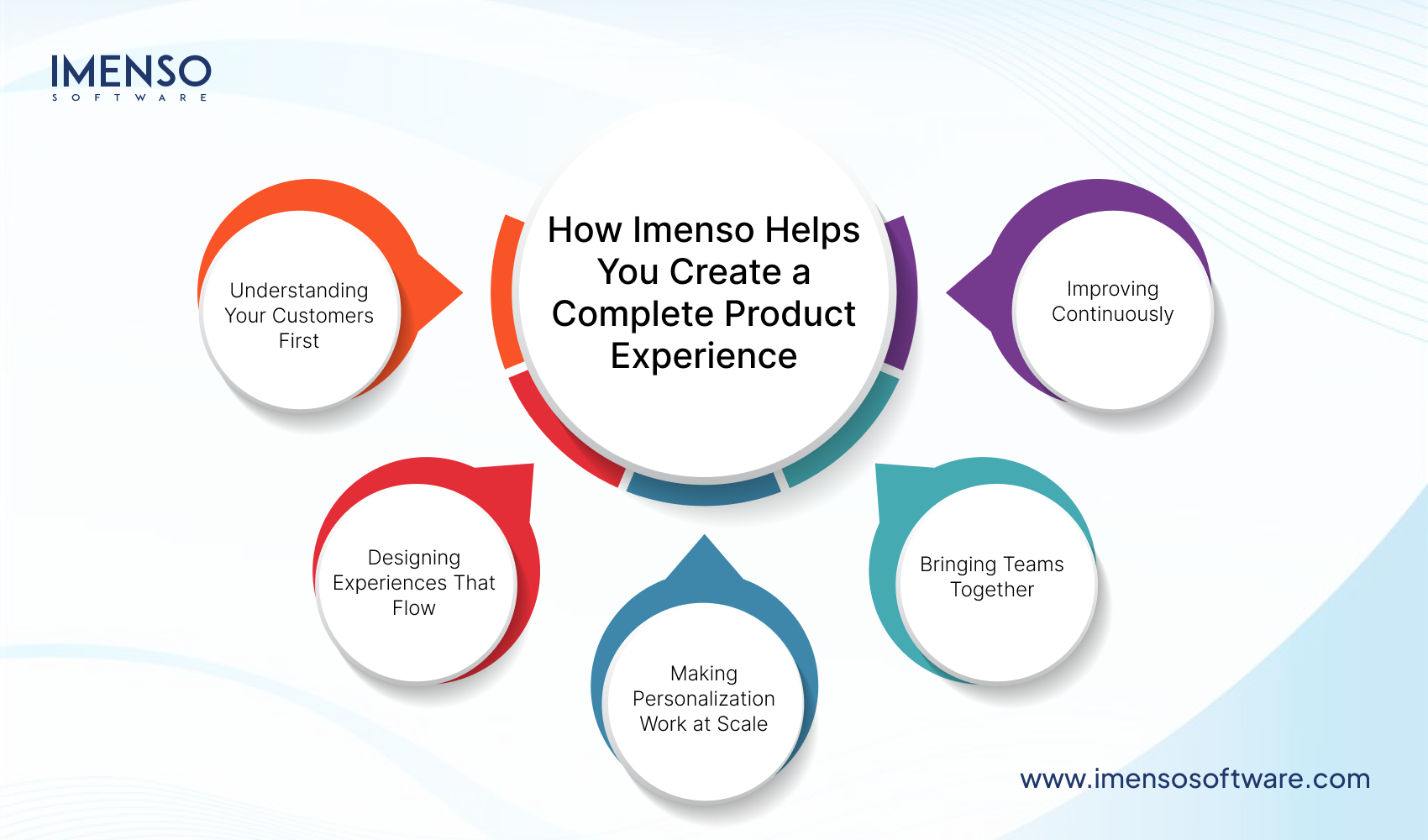
1. Understanding Your Customers First
We don’t jump straight into features. Imenso starts by learning about your customers through research and real data. This way, the product is built around what people actually want, not guesses.
2. Designing Experiences That Flow
From sign-up to support, every step should feel smooth. Our design approach makes sure users don’t hit roadblocks or feel lost while using your product.
3. Making Personalization Work at Scale
It’s easy to personalize for ten people. Doing it for thousands is harder. We use smart automation and AI to make sure every user feels like the product was made for them.
4. Bringing Teams Together
A product experience falls apart when marketing, product, and support work separately. We help align teams so the customer gets one clear, connected journey.
5. Improving Continuously
A great product experience is never “done.” With agile methods, we test, tweak, and enhance features so your product keeps getting better with time.
With this approach, Imenso helps brands move beyond just “building products” to creating experiences people remember, trust, and stick with.
Conclusion
A complete product experience is no longer optional. Businesses that want to grow and stand out must design with the customer in mind. Every touchpoint should feel consistent and utilize customer feedback to ensure constant improvement.
A strong product experience keeps customers loyal and turns them into advocates. The aim is not to perfect one step but to bring everything together. Design, ease of use, support, and emotional connection should flow as one. The result is an experience that feels simple, seamless, and memorable.
FAQs
- What is Complete Product Experience (CPE)?
Complete Product Experience is the full journey a customer goes through when interacting with your product, starting from discovery, through use, and onto ongoing support. It’s about creating a seamless and valuable experience at every stage. - Why does CPE matter for businesses?
A strong CPE earns trust and keeps customers coming back, which ultimately supports the brand’s growth. People are less likely to churn and more likely to become loyal users when they feel supported and understood as well as valued by a product at every touchpoint. - Which metrics reveal if your CPE is working?
Core metrics for CPE success include:
- Customer Satisfaction
- Net Promoter Score.
- Feature Adoption Rate
- Churn & Retention
- Customer Lifetime Value
- How is CPE different from Customer Experience (CX)?
While CX covers every interaction a customer has with your brand, CPE focuses specifically on the product and the ecosystem around it. It addresses how users discover it or use it. Also, evaluates how it helps users and how they feel connected to it. - Can you give examples of companies that get CPE right?
Here are two examples to consider:-
- Apple software ecosystem consistently delivers a connected experience—from design to support—making users feel confident and loyal.
Netflix offers personalized recommendations and optimized interfaces that make watching content easy and engaging.
Want more information about our services?


Similar Posts

Red Flags to Watch When Outsourcing Your MVP or Prototype
If you think it’s expensive to hire a professional, wait until you hire an amateur. ~ Red Adair Planning to outsource your MVP or prototype in 2025? You must be looking forward to having intrinsic qualities in it. However, the internet is full of tech specialists offering specialized services to develop various MVPs or prototypes […]...

Understanding MVPs: Launch Faster Without Compromising Quality
Did you know that almost 42% of startups fail because they made products nobody wanted? It’s a shocking statistic and an important lesson: building without validation is not a good idea. The Minimum Viable Product is a better way to innovate. An MVP lets you test your ideas with minimum investment. This is not about […]...

The Pros and Cons of Open Source Software Development: Weighing the Risks and Rewards
Are you tired of shelling out big bucks for proprietary software? Do you want the freedom to customize your software to meet your unique business needs? If so, open-source software development services might be the solution you’re looking for. Open-source software offers many benefits, from cost savings to collaboration opportunities and beyond. But like any […]...