Mistakes to Avoid When Choosing a Software Development Company
Ever rushed into a software project only to end up with a buggy app, blown budgets, and a missed launch? It happens when businesses skip proper vetting and jump into partnerships blind. Picking the wrong team can lead to skyrocketing costs, endless delays, and subpar quality that frustrates users.
Figuring out how to choose a software development company is critical to avoid these traps. In this guide, we’ll unpack four common mistakes—like prioritizing price over expertise—that tank projects.
Avoiding these saves you time, money, and major headaches, setting your startup up for success. Ready to learn the strategic way to pick a custom software partner that delivers? Let’s dive into the pitfalls to dodge for a smooth, successful project!
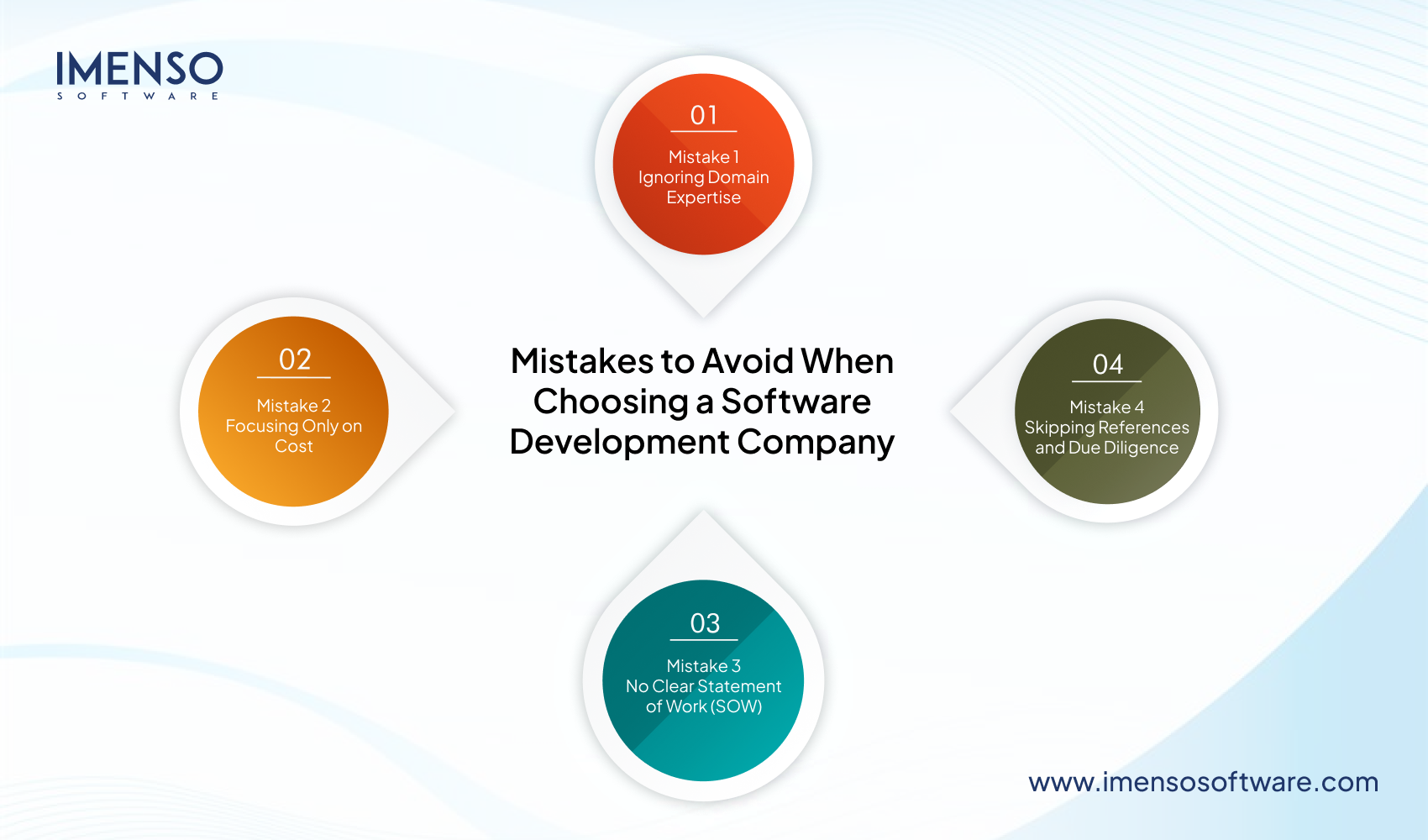
Mistake 1: Ignoring Domain Expertise
Picking a software team without industry know-how is like hiring a chef who’s never cooked your favorite dish. When figuring out how to choose a software development company, don’t assume coding skills are one-size-fits-all.
Many business leaders fall for flashy tech terms, and they totally overlook relevant tech experience. The consequences? Extended development, compliance issues, and user experiences that fall short. For healthcare, you require HIPAA experience; for FinTech, bulletproof security knowledge; for e-commerce, frictionless payment streams.
Instead, look for vendors with portfolios that highlight your industry, certifications, and regulatory acumen. Conduct pointed, industry-specific questions during tests and ask case studies from comparable projects. Putting industry-specific software development at the top of your list allows your startup’s custom software to resonate with users and meet regulations, reducing time and headaches.
Mistake 2: Focusing Only on Cost
Chasing the cheapest bid when learning how to choose a software development company is a trap. Budget pressure and short-term thinking make startups pick low-cost vendors, but it’s a gamble. Cheap development often means shoddy code, security gaps, and endless rework.
Offshore teams with language barriers or junior devs needing babysitting stretch timelines. Skimping on testing? Expect post-launch chaos. The real cost includes maintenance nightmares, missed market windows, and breach risks. Instead, focus on value: weigh ROI, speed, and quality.
A bid way below market screams trouble—think $20/hr vs. $80/hr. Use a scoring matrix to balance cost with expertise, communication, and reliability. Smart value-based software selection saves you from costly software development cost mistakes and ensures custom software ROI that powers your startup’s success.
Mistake 3: No Clear Statement of Work (SOW)
Diving into a software project without a clear Statement of Work (SOW) is like sailing without a map. When figuring out how to choose a software development company, skipping a detailed SOW invites chaos. Eagerness to start or assuming “we’re on the same page” leads to scope creep, budget overruns, and disputes.
A solid SOW needs feature specs, user stories, technical details, timelines, and clear “done” criteria. Include communication plans and change processes. Vague terms, missing edge cases, or unclear integration roles?
That’s trouble waiting. Involve tech stakeholders, use wireframes, and add buffer time for surprises. A proper SOW aligns expectations, protects both sides legally, and keeps your custom software scope tight. Don’t skip this step in startup development clarity—it’s your project’s backbone.
Mistake 4: Skipping References and Due Diligence
Rushing to pick a software team without checking their track record is a rookie move. When learning how to choose a software development company, skipping due diligence can burn you. Time pressure or slick marketing can trick you into trusting too soon. Always contact past clients directly—don’t just buy into polished testimonials.
Ask: Can they deliver on time? Handle hiccups well? Communicate clearly? Would you rehire them? Watch for reluctance to share contacts or patterns of delays. Dig deeper: check online reviews, verify certifications, and assess the company’s stability. Request live demos, peek at code quality, and confirm projects are still running.
Ensure their work style vibes with yours for smooth collaboration. Thorough software vendor due diligence saves you from costly custom software vetting mistakes and secures startup software references that build trust.
Set Your Software Project Up for Success
Avoiding the pitfalls of ignoring expertise, chasing cheap bids, skipping SOWs, or neglecting due diligence is key when learning how to choose a software development company. These mistakes lead to delays, budget overruns, and subpar apps.
By dodging them, you build a partnership that delivers. Create a solid evaluation framework—score vendors on skills, track record, and fit. Take your time; rushed choices cost more later.
A thorough software development partner selection process lays the foundation for custom software success, saving startups thousands.
Ready to find the right software development partner for your startup?
Frequently Asked Questions
1. Why is domain knowledge crucial in selecting a software development firm?
Domain experience guarantees that your development team is aware of your industry’s specific challenges, compliance requirements, and user expectations. A project in the healthcare sector requires HIPAA expertise, whereas FinTech calls for robust security regulations. Without it, you stand to lose extended timelines, regulatory problems, and bad user experiences. Selecting a vendor with similar industry experience ensures that you get a product that satisfies technical as well as business requirements adequately.
2. What if I select a software vendor solely on price?
Picking the lowest-cost vendor tends to result in inferior code, security risks, and unseen long-term costs. Startups pursuing low bids risk rework, lost launch dates, and increased maintenance costs. A vendor who is drastically underbid may not have experience or assets. Instead, consider value—trading off cost for expertise, communication, and quality—to achieve stable software development and lasting ROI.
3. Why does a Statement of Work (SOW) help to avoid project failure?
A clearly written SOW is the blueprint for your project, outlining features, timelines, responsibilities, and success factors. Without it, teams suffer from scope creep, conflict, and cost blowouts. A well-written SOW ensures everyone is aligned, sets up communication processes, and includes change management plans. This reduces risks, protects your investment, and keeps your project on track from start to finish.
4. Why is due diligence necessary before hiring a software development company?
Skimping on due diligence exposes you to sketchy vendors and project failure. Promises of marketing aren’t sufficient—interview previous clients, read online reviews, confirm certifications, and assess project stability. References uncover how an organization works through challenges, communication, and deadlines. Careful vetting guarantees trust, minimizes risks, and allows you to pick a partner that aligns with your vision, saving time and money in the future.
Want more information about our services?


Similar Posts
Effective Strategies for Deploying .NET Solutions: Testing and Deployment Best Practices
Are you aware that almost 60 percent of software projects are delayed because of problems related to deployment? Deploying .NET solutions is complicated. There are a lot of things that can go wrong. But you can always mitigate problems if you follow specific procedures. Testing and deployment are important. If you choose to skip testing, […]...

How To Get A Million Downloads To Your App And Make Big Bucks
You have built an app. It looks amazing. The UI is simple, attractive, full of elements that users will love. The test runs were also great. Your friends and family like it too. And you finally submitted it on the app store and google play store....

How to Reduce Development Costs Without Sacrificing Quality
Every business is seeking answers to a critical question: How to reduce software development costs without compromising quality? Does a business spend too much money to get perfection, or cut corners and risk mediocre results? Are there ways to optimize for both? Think about it: what if you can cut costs, speed up development, and […]...