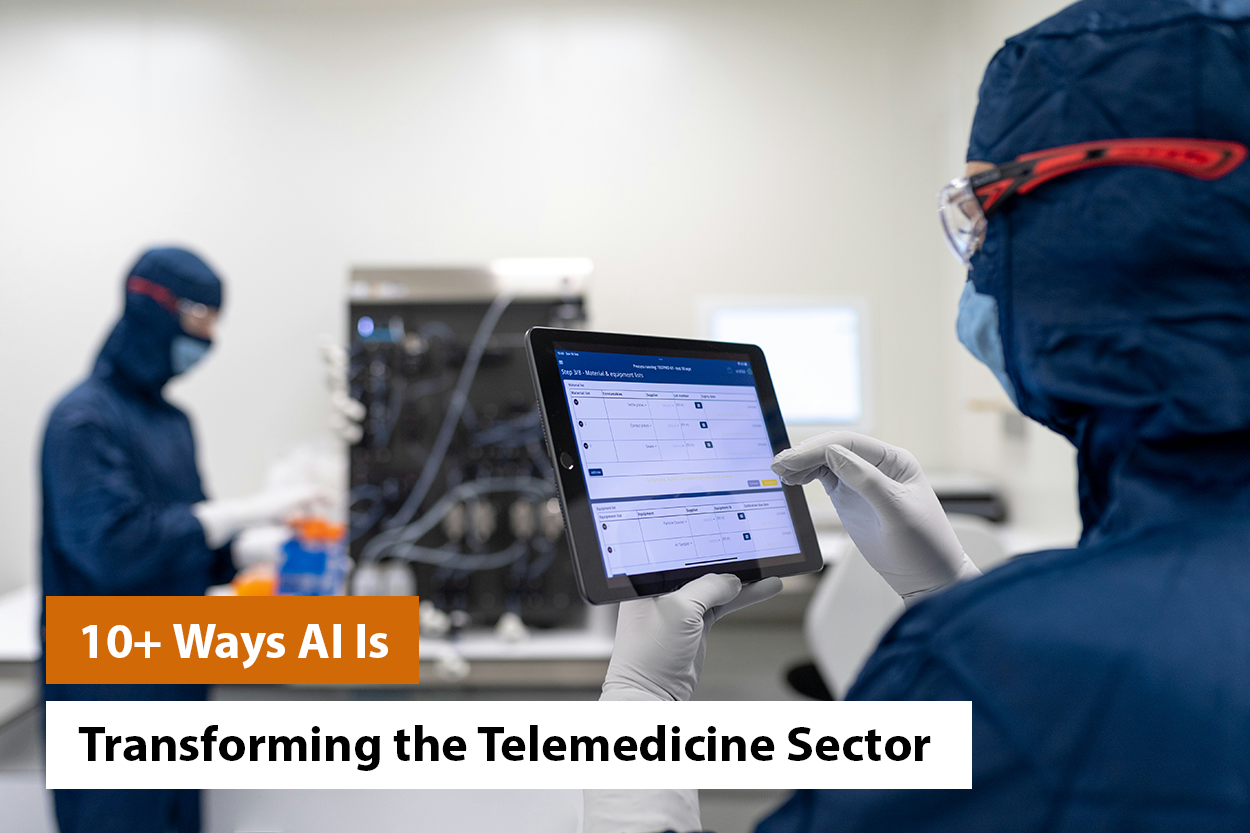
10+ Ways AI Is Transforming the Telemedicine Sector
Telehealth appointments boomed during the pandemic in the U.S. They haven’t declined ever since. Instead, the following years show that they will remain an integral part of healthcare.
And why not? This mode of delivering medical care offers numerous benefits for patients and clinicians alike. It makes care more accessible to 89% of U.S adults while also reducing cost. Globally, telehealth caters to 78% of adults with smartphones. This includes those in medically underserved regions.
The integration of AI in telemedicine further takes its potential to new heights. AI has several use cases in telemedicine. From image analysis to triage and beyond, it significantly enhances efficiency in healthcare. Clinicians have been fast realizing its contribution. A survey by the American Medical Association reveals that the number of physicians leveraging AI has swiftly jumped from just 38% in 2023 to 66% in 2024. Telehealth provided over telecommunications infrastructure is a major area that is massively benefiting from AI.
Let’s explore the key ways in which this technology in telemedicine is proving to be an asset to both doctors and patients.
Scope of AI in Telemedicine (Market Explained)
The scope of AI in the telemedicine market is vast. This is mainly due to the breakthroughs in this technology. Advanced algorithms significantly enhance the potential of medical applications. They enable them to analyze data more accurately and quickly, leading to better patient outcomes.
In the U.S, integration of AI in telemedicine is anticipated to expand to USD 48.2 billion by 2033.
Chief growth drivers are:
- An aging population
- Prevalence of chronic diseases
- Government initiatives promoting digital medical care.
Here are some key statistics at a glance
- The software sector is projected to lead the growth of AI in the telemedicine market. In 2024, it accounted for 60.2% of revenue.
- Virtual nursing assistants are expected to reign supreme. They are projected to grow at a CAGR of 51.6% from 2024 to 2030.
- In 2024, home care held the largest revenue share (48.5%).
- North America is expected to dominate the worldwide AI in telemedicine market. The telehealth market in this region is projected to reach USD 29.66 billion by 2032.
How AI in Telemedicine is Changing the Future of Healthcare Accessibility
AI is making sweeping changes in the telemedicine sector. Below are the key ways it’s making an impact.
1. Remote Patient Monitoring (RPM)
The integration of AI into RPM has been revolutionary. It has enhanced patient care and enabled proactive interventions. Below are 3 key ways in which AI’s impact can be seen.
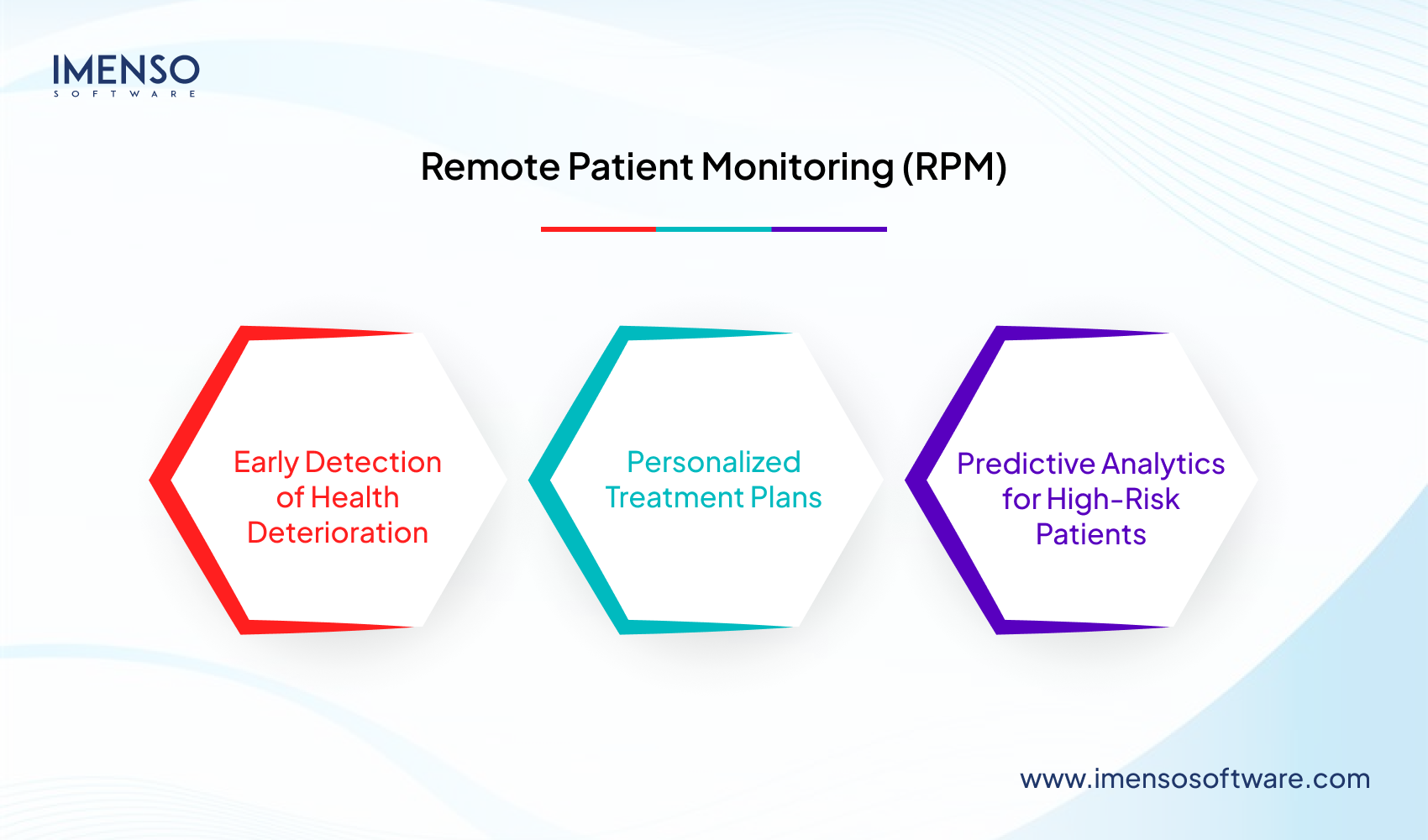
a. Early Detection of Health Deterioration
AI algorithms can detect health deterioration early. This lets physicians implement the required measures at the right time. Here’s how it happens.
- Near Real-Time Monitoring: Wearables and smartwatches provide continuous data streams. It enables AI algorithms to detect subtle changes quickly.
- Pattern Recognition: AI spots irregular patterns. These include arrhythmias and respiratory distress, among others. AI platforms use machine learning and natural language processing to identify any unusual changes..
- Anomaly Detection: AI algorithms are trained to spot anomalies outside the normal ranges. Thus, physicians learn about potential risks. It, in turn, ensures timely interventions.
- Predictive Analysis: AI forecasts risks based on past trends. This can be declining heart rate variability or higher stress markers. Thus, it can predict events like cardiac episodes or mental health issues. In fact, cardiovascular AI RPM solutions are most used by physicians across the US.
b. Personalized Treatment Plans
One of the greatest impacts of AI in the telemedicine market is visible in custom treatment plans. AI in RPM uses data-driven insights and Generative AI to offer personalized treatments. Below are its key components.
- Data Integration: AI assembles data via interoperable standards. These can be SMART on FHIR. It ensures compatibility across platforms.
- Predictive Analytics: Machine learning predicts treatment results. It optimizes interventions based on past data.
- Risk Assessment: AI spots risks by analyzing patient-specific variables
Treatment Recommendations: Gen AI generates custom plans. It includes medication, lifestyle, and mental health measures. It prepopulates EHR summaries for operational efficiency.
c. Predictive Analytics for High-Risk Patients
- AI in RPM excels in predicting risks across individual and population health levels. Here’s how,
- Data Collection: RPM gathers extensive data. This includes real-time metrics and past records.
- Machine Learning Algorithms: ML algorithms continuously learn from historical data. It enhances predictive accuracy over time.
- Risk Stratification: AI segments patients by risk level so physicians can prioritize interventions.
- Alerts and Notifications: Real-time alerts prompt providers to act proactively.
2. AI-Driven Virtual Rehabilitation (VRehab)
The latest advancement in telemedicine and AI in healthcare can be seen in AI virtual rehabilitation. It aims to improve the mental and physical health of patients living in the community. Today, people in major urban areas use internet services. This has led VRehab to go mainstream.
VRehab uses home-based virtual therapy sessions and exercise to enhance patients’ well-being. During these sessions, clinicians use technologies that generate large and complex single- or multi-modal datasets. To support patient recovery, new analysis methods are needed for these datasets. It’s exactly here that AI comes in.
VRehab expands healthcare access to diverse populations by delivering services virtually. The only two requirements are that the patients have internet-connected devices. Secondly, they should be digitally literate.
Role of AI in VRehab
AI’s role in VRehab can be broken down into the following steps:
- VRehab programs include a clinical assessment with patients virtually or physically.
- After the assessment, the provider prescribes a tailored VRehab program. These include regular educational sessions and exercises that improve function and mobility.
- Several sensing devices are used for the first virtual clinical assessment. This lets the provider gather ambient, physiological, and contextual data from patients during the VRehab session. For example, a webcam on the patient’s laptop can be used to capture their videos as they perform exercises. This supplies the clinician with information about their functional recovery.
- Next, AI algorithms are built using these single or multi-modal data. These algorithms measure the overall improvement of the patient in their rehabilitation program. It also provides resources and feedback to patients to successfully complete their programs.
3. Personalized Behavioral Health Services
“Telehealth paired with effective, responsible AI usage, it holds the promise of more effective and personalized mental health services.”
– A telepsychiatry provider CEO
The behavioral health landscape faces many challenges. These mainly come from a drastic shortage of providers. A higher demand for services is another cause. This disharmony between supply and demand has led to several issues. The most pressing ones include long wait times and difficulty getting care.
Today, over half of behavioral health encounters occur virtually. With telehealth, patients don’t need to take time off from work or travel to appointments. It has enabled improved clinical outcomes. The integration of AI in telemedicine and telehealth further optimizes care. Below are several ways in which this is taking place.
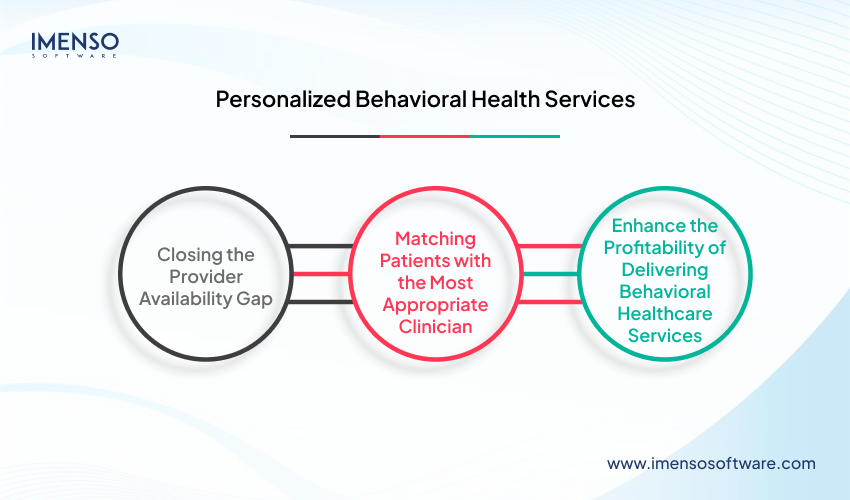
a. Closing the Provider Availability Gap
AI helps address the provider shortage. It can handle routine tasks. This gives clinicians more time to spend with patients. Thus, they can make better decisions about their treatment.
b. Matching Patients with the Most Appropriate Clinician
AI risk modeling involves analyzing a range of patient data to discover clinical urgency and care needs. These include factors like past diagnoses, medication history, and more. By processing this web of data, AI can generate a risk score for every patient. It thus provides a deeper understanding of their existing mental health condition. It also makes clinicians aware of the future risks.
c. Enhance the Profitability of Delivering Behavioral Healthcare Services
AI enhances operational efficiency and expands access to care. This positively impacts a health facility’s bottom line. AI algorithms analyze patient data. They use real-time factors to streamline appointment scheduling. AI in behavioral health services also reduces clinican’ workloads. This optimization lowers no-show rates.
AI can also automate the entire virtual care process. Healthcare facilities can streamline everything, from patient intake to follow-up care. This lets clinicians focus more on direct patient care. They can potentially see more patients in a specific time frame.
4. Improved Healthcare Fraud Protection
Healthcare fraud results in losses amounting to tens of billions of dollars annually. According to the Association of Certified Fraud Examiners (ACFE), AI is a game-changer for identifying and halting fraudulent activity. The three key ways in which AI improved fraud detection are:
I. Enhanced accuracy
AI systems can examine large datasets. This minimizes the chances of false positives and negatives in fraud detection.
II. Real-time detection
AI enables real-time monitoring and tracing of fraudulent activities. It leads to immediate response and mitigation.
III. Scalability
AI solutions can scale to accommodate the increasing volume of healthcare data. Scalability ensures consistent protection across the healthcare system.
Common Applications of AI in Healthcare Fraud Detection
Providers are increasingly realizing that the best way to invest in AI and telemedicine is with AI-based platforms. Below is a list of 8 such common platforms.
1. Voice biometrics for patient verification
AI-based voice biometrics can verify patient identities. This prevents the wrong individuals from accessing healthcare services.
2. Real-time fraud analysis
AI platforms scan transactions and communications in real time. These systems can spot suspicious activities and notify relevant authorities.
3. Automated claim processing
AI can automate the insurance claims processing. It minimizes the risk of human error. AI algorithms effectively detect inconsistencies indicating fraud.
4. Fraudulent prescription prevention
AI examines prescription patterns to spot potential fraud. Due to this, unauthorized people cannot obtain controlled substances.
5. Insider threat monitoring
AI systems scan employee activities. Any instance of insider threats can be effectively indicated by detecting unusual activity.
6. Social engineering attack detection
AI can spot and flag voice phishing attempts. This protects healthcare staff from social engineering tactics.
7. Call authentication for telehealth services
AI systems can verify the authenticity of calls in telehealth services. It secures communication between clinicians and patients.
5. AI-Based Digital Twins for Patients
“A digital twin is a model of an entity that incorporates all its components and their dynamic interactions,” says Natalia Trayanova, Murray B. Sachs director of the Alliance for Cardiovascular Diagnostic and Treatment Innovation at Johns Hopkins.
Digital twins represent another area where the impact of AI in telemedicine is revolutionary. These are AI-based virtual models of physical objects. They mimic the behavior of their real-world counterparts. This, in turn, allows for comprehensive analysis, simulations, and forecasts.
Here’s how an AI-based digital twin system helps clinicians.
Machine Learning (ML)
ML algorithms allow digital twins to learn from healthcare data. By assessing patterns and trends, ML enhances the accuracy and predictive abilities of digital twins. Clinicians are thus better able to forecast disease progression and patient responses to medicine.
Natural Language Processing (NLP)
NLP allows digital twins to understand unstructured medical data. These can be doctors’ notes or patient histories. This ensures that all required data is incorporated into the digital twin. It thus provides a detailed view of the patient’s health.
Deep Learning
Deep learning techniques are used to model complex physiological and disease mechanisms. These algorithms improve the digital twin’s ability to make accurate predictions about patient outcomes. They support early diagnosis and help doctors tailor custom treatment plans.
The solutions that clinicians receive with the aid of digital twins allow them to simulate various treatment situations. They can optimize the care plan and forecast potential issues.
6. Accessible Telehealth Platforms
Telehealth offers patients unmatched access to remote care. Still, for many people with disabilities, these systems often fall short. AI in the telehealth and telemedicine market is effectively breaking down these barriers. By automating accessibility adaptations, it addresses key challenges. Here are three main ways where AI makes a difference.
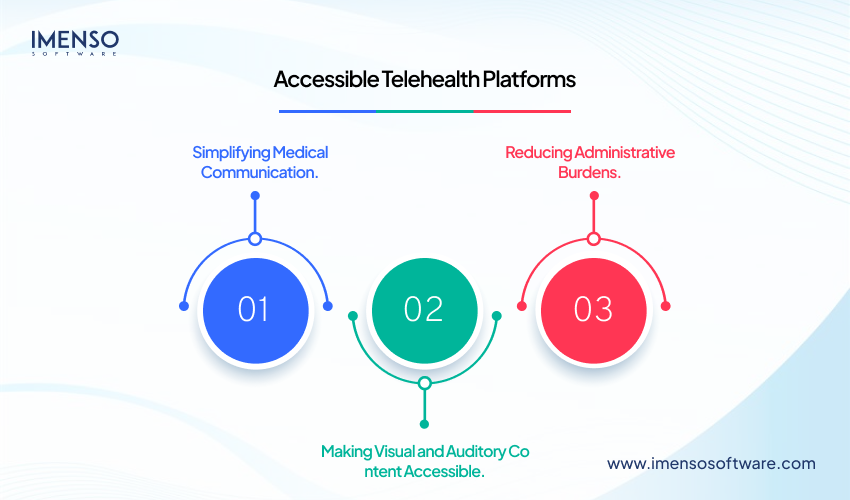
1. Simplifying Medical Communication.
Patients with cognitive disabilities often encounter dense, jargon-filled content in telehealth systems. NLP models examine complex medical text. Then, they generate plain-language summaries. For example, AI can rewrite “Administer 5 mg of rivaroxaban every day for venous thromboembolism prophylaxis” to “Take one 5 mg blood thinner tablet daily to avoid blood clots.” This reduces patient confusion and helps them stick to their treatment.
2. Making Visual and Auditory Content Accessible.
Medical imaging is crucial for diagnostics. But without descriptions, blind patients miss vital information. AI-based computer vision tools automatically generate alt-text for MRIs, X-rays, and ultrasounds. A chest X-ray might be explained as “showing a 3 cm shadow in the lower right lung, possibly pointing to pneumonia.” In the same way, there are speech recognition models customized to typical speech patterns in conditions like Parkinson’s disease. They enhance transcription accuracy. AI models ensure patients’ voices are accurately captured during virtual sessions.
3. Reducing Administrative Burdens.
Clinicians providing long-term and post-acute care spend much time on documentation. This diverts their attention from patient care. AI scribes trained on varied datasets can automate visit summaries. They flag urgent needs like a nonverbal patient’s gestures indicating pain.
7. Differential Diagnosis
Cutting-edge AI models can now synthesize a variety of patient data. This includes demographics, family and personal medical histories, medication used, medical records of patients, and more. This results in accurate differential diagnoses.
A recent study showed how AI systems can correctly differentiate between 10 types of dementia. This is true even in mixed-pathology cases by combining data on co-morbidities and medications. The AI’s diagnostic accuracy was as high as 0.96 for single diagnoses and 0.78 for mixed cases!
So, consider it as an intelligent helper in a doctor’s office. It collects all kinds of patient information and helps detect what might be wrong.
Just as importantly, the technology reduces clinical bias in remote care. It extends the range of differential diagnoses. Thus, conditions linked to specific ethnic backgrounds, rare diseases, or side effects are well highlighted. Human clinicians can unintentionally lose sight of these factors. AI reports facilitate fewer missed diagnoses and shorter delays in reaching the right conclusion. It is of huge importance in telemedicine, where patients often present with limited or incomplete information.
8. Round-the-Clock Personalized Assistance
Telemedicine and AI in healthcare are making remote patient care better, faster, and more accessible. Tasks like tracking patient vitals and alerting clinicians are no longer a load on hospital staff. AI-driven assistants in telemedicine act like tireless helpers. They are capable of doing many significant tasks, like:
- Answering health questions
- Guiding patients through symptoms
- Scheduling appointments
- Reminding patients about medications
- Collating and assessing patient data
Thus, healthcare feels more personal to patients and less burdensome to clinicians. Beyond offering assistance with manual and repetitive work, AI personalizes healthcare. In this role, it studies unique patient information to make tailored treatment plans. This erodes the need for unnecessary tests or hospital trips. The best part is that this happens without the barriers of distance, language, or restricted resources.
9. Smarter Virtual Triage
One of the popular approaches to AI in the telemedicine market is the use of virtual triage tools. Using advanced ML algorithms, they quickly assess symptoms and medical data remotely. Then, patients answer a set of questions about their symptoms, their severity, and their medical history, just like they would respond to a skilled nurse. The tools then suggest the next steps. It can be seeking self-care advice or booking a virtual consultation.
Virtual triage tools are leading to improved outcomes. For instance, the AI-powered symptom checker launched by NIB in Australia achieved 97.2% accuracy. It correctly referred 64% of users to GPs, 15% to emergency care, and 21% to home monitoring. Cleveland Clinic’s virtual triage system has consistently shown 94% accuracy ever since it was launched. It uses specific algorithms, electronic health records, and image analysis to make reliable decisions quickly. The impact is clear in high patient satisfaction and reduced administrative time.
10. Telesurgery and Robotic Assistance
Surgery-related activities were significantly affected when the pandemic struck. Telesurgery and robotic surgical interventions enabled life-saving operations to be performed remotely. The trend continues with improved results as the technology advances.
Take, for instance, urology, a domain that depends on delicate, precision-driven procedures. With robotic telesurgery, urologists operate remotely on patients via systems controlled through high-speed internet. This technology also makes their care accessible to underserved areas, like Africa. Surgeons can perform complex prostatectomy, nephrectomy, and cystectomy very precisely. They are less invasive, which reduces pain and aids in faster recovery.
The robotic systems being made today are expected to refine surgical precision further. Advanced controls like haptic feedback, better force sensitivity, and imaging radically take the accuracy of robotic surgery to new heights.
The addition of AI fed with sufficient patient and surgical data has several abilities and benefits. These include:
- Higher precision in operations where steadiness in hand movements is paramount
- Real-time decision support during live surgery
- Predictive support in anticipating the operation’s needs
- Reduced chances of mistakes in high-risk procedures
- Improved patient safety with predictive analytics
11. Simplified Admin Tasks in Telemedicine
Behind every telemedicine appointment lies a load of paperwork. Admin tasks, like scheduling, billing, insurance claims, documentation, and follow-ups, are usually never-ending. Traditionally, they’ve consumed as much as 28 hours of a clinician’s week. This is the time that can go toward patient care.
AI changes it for the best. Tools like natural language processing (NLP) and generative AI, conversations with patients are transcribed into ready-to-use SOAP notes. Billing data can be pre-filled into claims, and prior authorizations get completed in minutes instead of days. Moreover, virtual assistants and chatbots handle appointment scheduling, reminders, and intake questions. This gives patients smoother and satisfying experiences.
The business impact is measurable. A recent study in JAMA Network Open reviewed the ambient AI for clinical documentation. It showed that the tool reduced average time spent on notes per appointment (from 6.2 to 5.3 minutes) (a meaningful drop). It also had a direct impact in minimizing mental workload and after-hours stress.
Partner with Imenso Software to Transform Your Telemedicine Platform With AI Integration
AI-driven telemedicine services demand efficient AI algorithms for accurate diagnosis and treatment. At Imenso Software, we have served as a leading technology partner for numerous healthcare businesses. By utilizing the latest technologies, we fluidly integrate robust healthcare platforms.
For example, we built a HIPAA- and PCI-compliant, serverless SMS payment recovery system for MobilePay Patient Services. We integrated the solution with their legacy system. For this, we used AWS Lambda for auto-scheduling and Twilio for SMS. Patients gained secure payment options like credit cards, Apple Pay, and Amazon Pay.
Another example is our Power BI dashboard for a U.S. healthcare provider. The solution solved issues with slow SQL queries, large datasets, and complex modeling. By migrating to a Lakehouse architecture and adding features like Direct Query and sync slicers, the solution delivered real-time insights. It led to smoother workflows and unified data management.
Our work is a testimony to our excellence in creating AI-driven telemedicine platforms. If you are looking to enhance the efficacy of your healthcare through telecommunications technology, reach out to us today.
Frequently Asked Questions
1. What is the future of AI in telemedicine?
The future looks promising. We can expect tools like AI-driven chatbots and predictive analytics to improve healthcare efficacy. AI in telehealth will also lead to proactive care through personalized medicine and remote monitoring.
2. How does AI help with improved drug discovery?
AI improves drug discovery by assessing enormous bio datasets. This allows it to spot potential drug targets. It can also virtually screen many compounds for safety and efficiency. In doing so, it minimizes drug cost and development.
3. How can healthcare providers implement AI in telemedicine?
Clinicians can implement AI in telemedicine in numerous ways. They can integrate AI-driven chatbots to handle routine patient procedures. Predictive analytics can be used to spot health trends. AI can also analyze medical images and patient symptoms. This leads to quicker and more accurate diagnosis.
4. Are there any drawbacks of AI in telemedicine?
There are a few drawbacks of AI in telemedicine. These include data privacy risks and bias in algorithms. This bias can lead to unequal treatment outcomes. A lack of digital literacy also prevents people from leveraging the benefits of AI in telehealth.
Want more information about our services?


Similar Posts
Telehealth Development- Transforming the future of healthcare
Telehealth is transforming how we get healthcare, and it is at the forefront of that shift. Telehealth, also known as telemedicine or e-health, is revolutionizing the healthcare industry by using technology to connect patients with medical professionals virtually. With the increasing demand for healthcare services and the limited resources available, telehealth has become an important […]...
AI in Healthcare – Transforming the Future of Medicine
Quick Summary The AI in healthcare industry is unlocking possibilities we couldn’t have imagined a decade ago. It analyzes scans in seconds, predicts patient risks before symptoms appear, and helps design life-saving drugs with generative AI in healthcare. This amplifies their skills to enable more accurate, affordable, and personalized care. Artificial Intelligence is quietly […]...

HIPAA Compliance for Software: A Practical Guide
Security breaches hit all types of businesses. The hardest hit of them all are the healthcare providers and their patients. In 2024, over 500 patient records were compromised. More than 20 healthcare providers had to pay hefty penalties for HIPAA violations. In light of this, the current situation seems shocking. HIPAA audits conducted for the […]...